
From taboos to talk
With From Taboos to Talk we explore new ways of approaching sexual health, in order to promote open and honest conversations. 
Through four future scenarios we speculate around two main driving forces that might lead the development of sexuality education in Norway in different directions — asking who should be the focus, and where it should take place.
This speculative design diploma reimagines how and when we learn about our bodies, gender expressions, identities and sexual wellbeing, in order to promote a respectful approach to sexuality, less discrimination, inequality and sexual violence.
Through storytelling we want to contribute to a broader discussion about sexual health and sexuality education, exploring new ways sexuality might be learnt, as well as new arenas where reflection and mutual understanding might occur.
We ask who might be the focus in sexual education; A strong focus directed at the children or a cross generational focus?
We ask where it might take place; Should it take place in the public sphere or the private sphere?​​​​​​​
Where The Oslo School of Architecture and Design (AHO), diploma / master thesis 
When 2023 
Team Ragne Helene Solum Mathiesen and myself. Supervised by Marie Louise Juul Søndergaard and Josina Vink.
My role Storytelling, strategic foresight, facilitation of co-creative sessions with users and experts, visualisation, physical and digital future artifacts
Result Four future scenarios with 13 design fiction artifacts, developed and tested through four months of co-creation with teachers, parents, experts and interest organizations, validated in a public exhibition, and translated into an open workshop kit at taboostotalk.com
Recognition 
Winner of the AHO award for Best use of strategic design 2023
Nominated for the AHO Sustainability award
Shortlisted for the IT Student Design Award
Exhibited at Milan Design Week 2024 as part of the interdependence exhibition hosted by Politecnico di Milano
There is no quick fix
The majority of Norwegian teenagers have had less than three hours of sexuality education during their entire schooling, and most of them miss information about every single topic (Sex og samfunn, 2022). 
Teacher students do not learn about sexuality in their education, so as a child, the quality of your sexuality education closely depends on the motivation of your teacher. And despite political consensus that this needs to change, very little is done. A reason might be that the responsibility falls between two stools: the health and the educational sector. Internationally, the right to sexuality education is under growing pressure.
We do not actually lack knowledge about what comprehensive sexuality education should be. We lack the means to provide it. 
As with any complex issue, there is no quick fix.

Without comprehensive sexuality education we allow the taboos to persist, and children are left with the impression that sexuality is something scary, not something great!
Influencing the decision makers, not the children
Children are not inherently embarrassed about sexuality. It is the way adults speak about it that determines whether we pass the taboos on or challenge them. That is why we focused our efforts on the network surrounding children, rather than the children themselves. The problem lies with those who provide sexuality education, not with those who receive it. So our brief became:
Rethinking what future sexuality education might look like for primary school pupils, with a focus on the positive aspects of sexuality and self exploration, using tools from norm critical, speculative and strategic design.
A speculative exploration
This is not a traditional service design diploma. In a deadlock situation like this, we are dealing with processes of change, not solutions. The futures we built are not about predicting the future, rather they are a tool for reflection and discussion. They provide a free space and a sandbox for exploration, less focused on what is, and more focused on what might be.
What does this future look like?
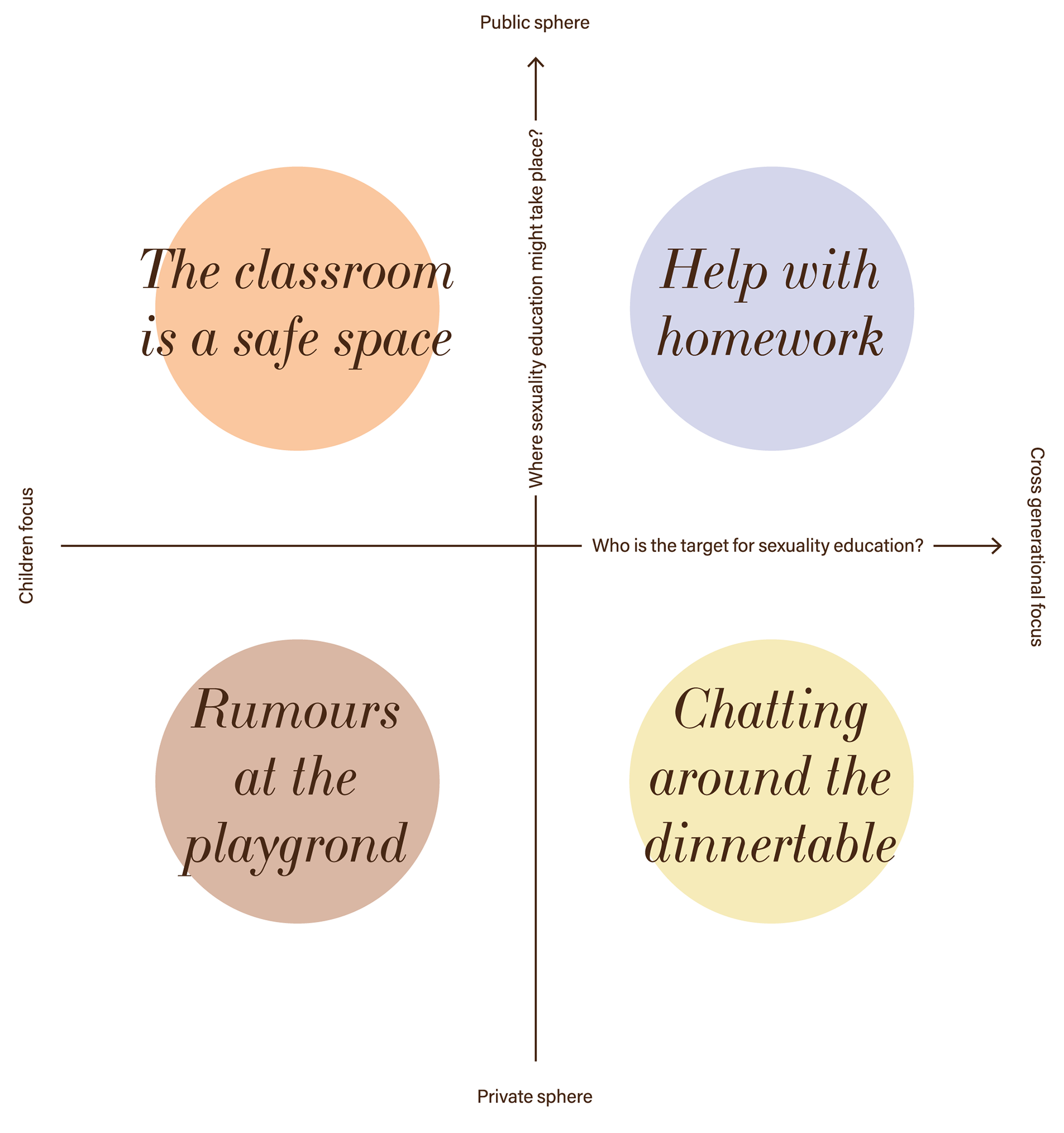
Based on insight from experts and stakeholders, two driving forces emerged as the most relevant: who is the target of sexuality education, from children focused to a cross-generational focus, and where sexuality education takes place, in the public or the private sphere. To explore how these driving forces might influence each other, we used them as values in an axis diagram. An intensive co-creative design process resulted in four future scenarios:
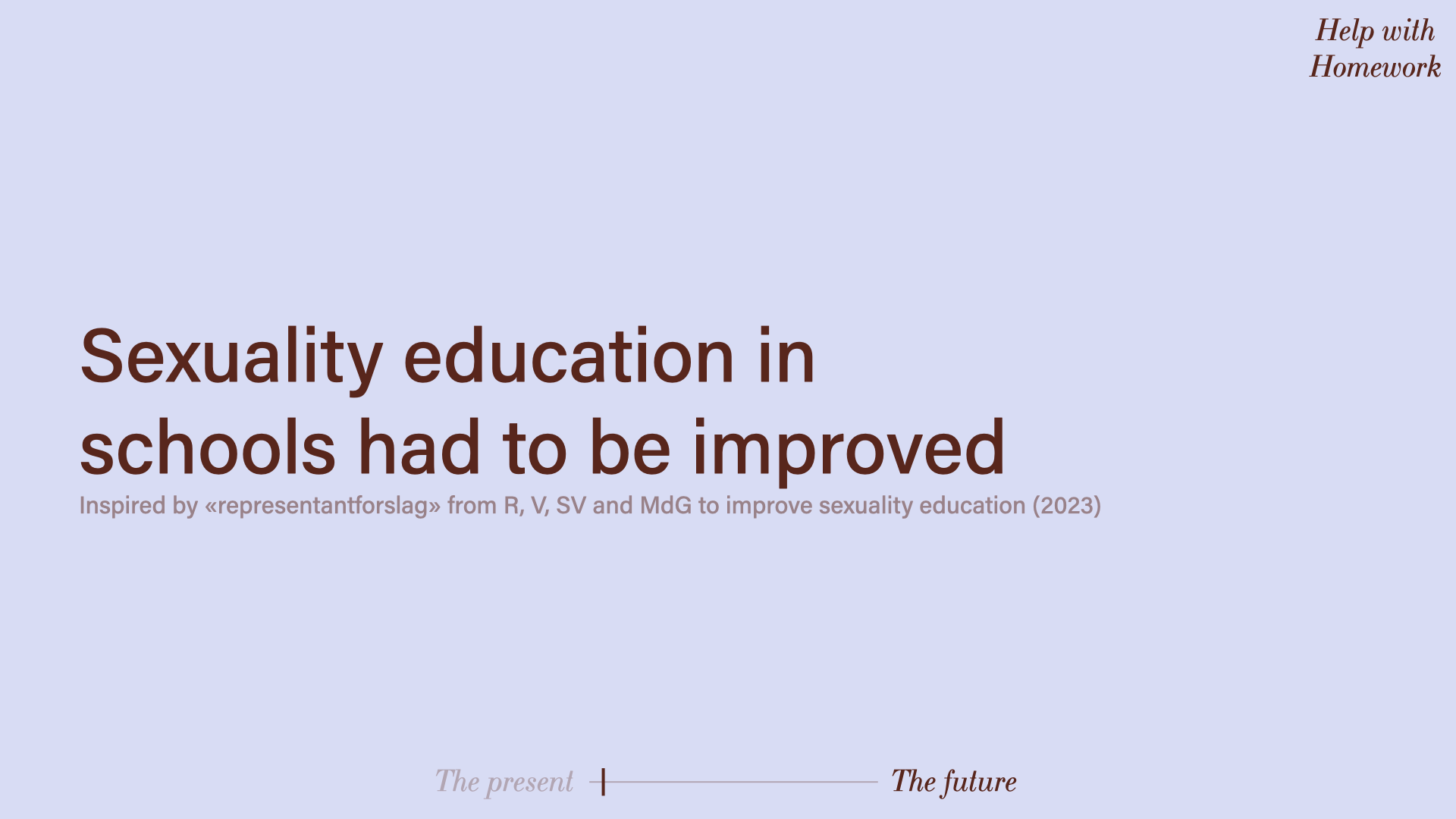
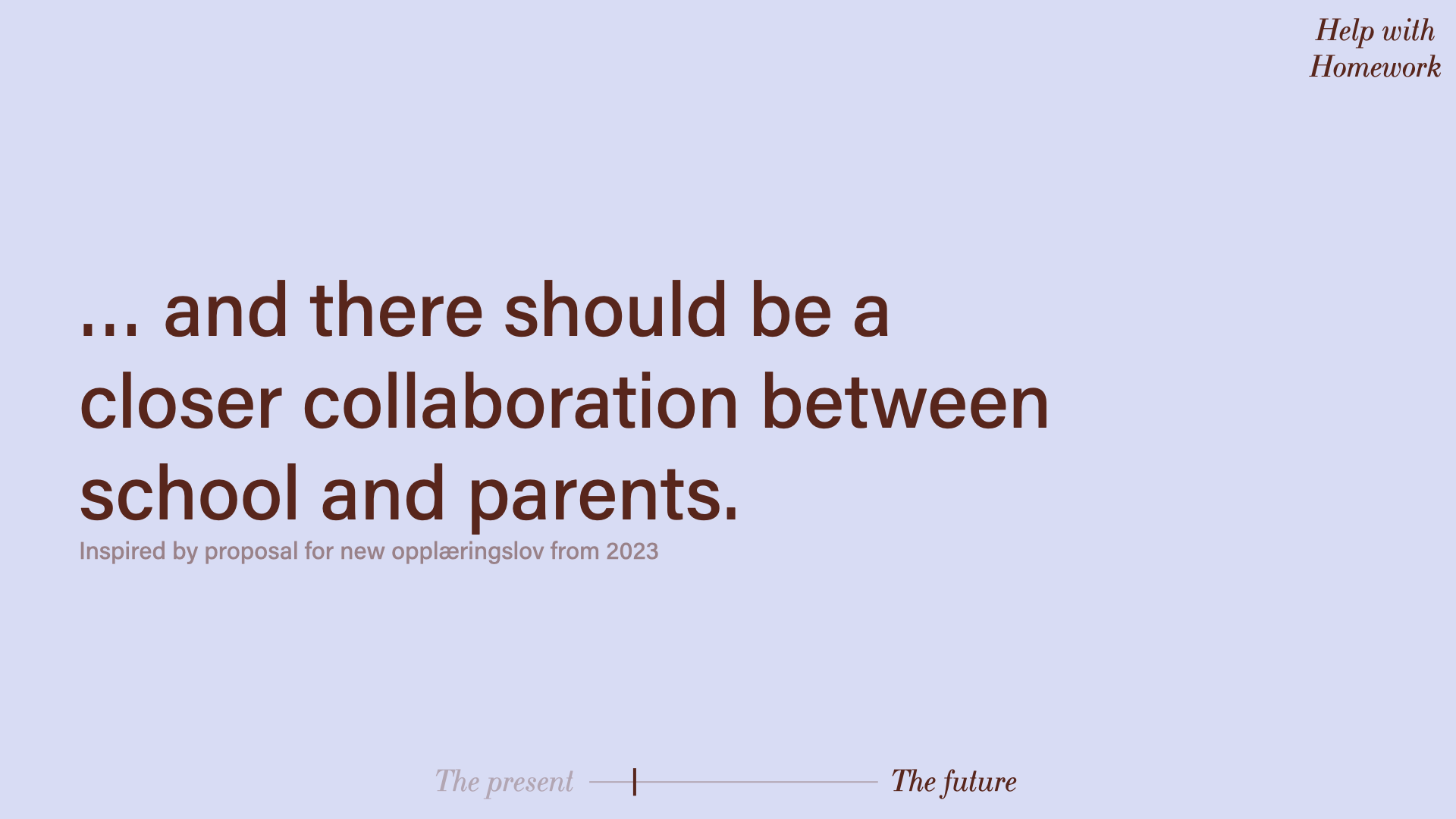
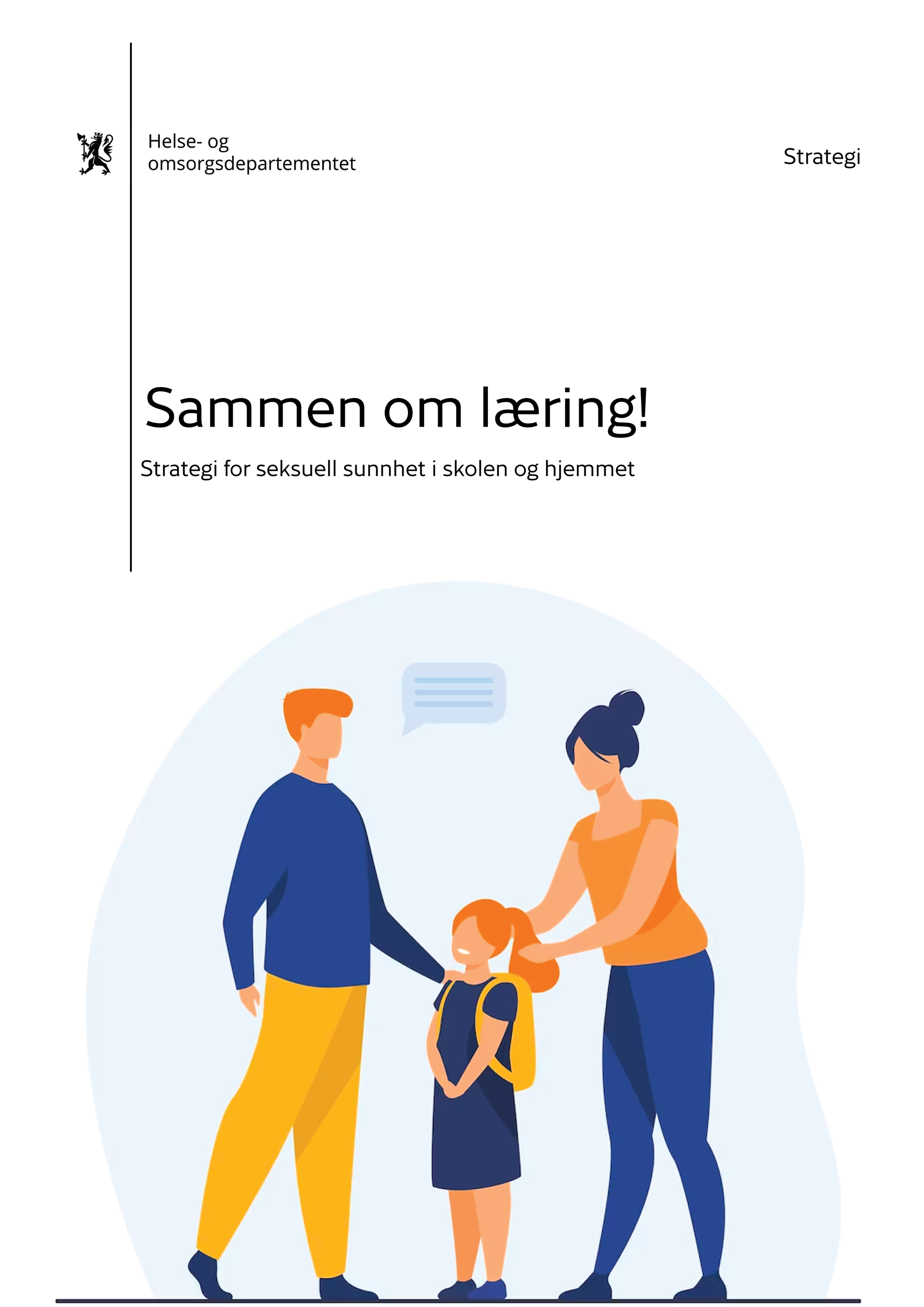
Help with Homework where sexuality education is a close collaboration between the family and the school
Chatting Around the Dinner Table where sexuality is no longer a taboo within the family
Rumours at the Playground where children learn about sexuality on their own terms, without adult supervision
The Classroom is a Safe Space where children can express themselves and talk openly about sexuality in school

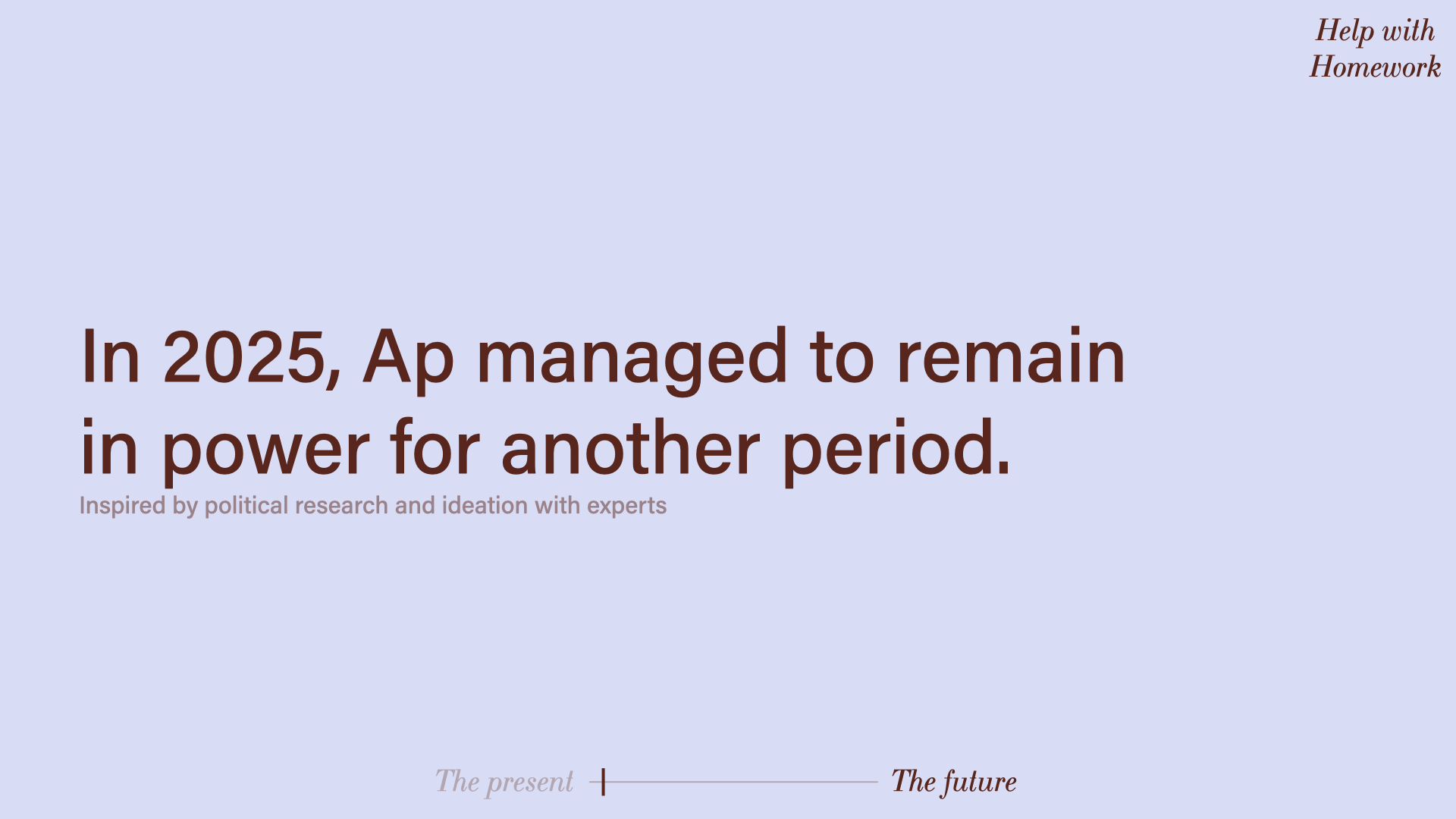
Each scenario is experienced in three layers: the background and context -  a fictitious chain of political events, based on political research and ideation with experts on what might be plausible, with every assumption annotated with what inspired it; the network surrounding the child, experienced through parents and teachers; and the child itself. 
Each scenario ends with a reflection prompt rather than a conclusion, like: How can we bridge the gap between those who view sexuality as something to be celebrated and those who still consider it taboo?

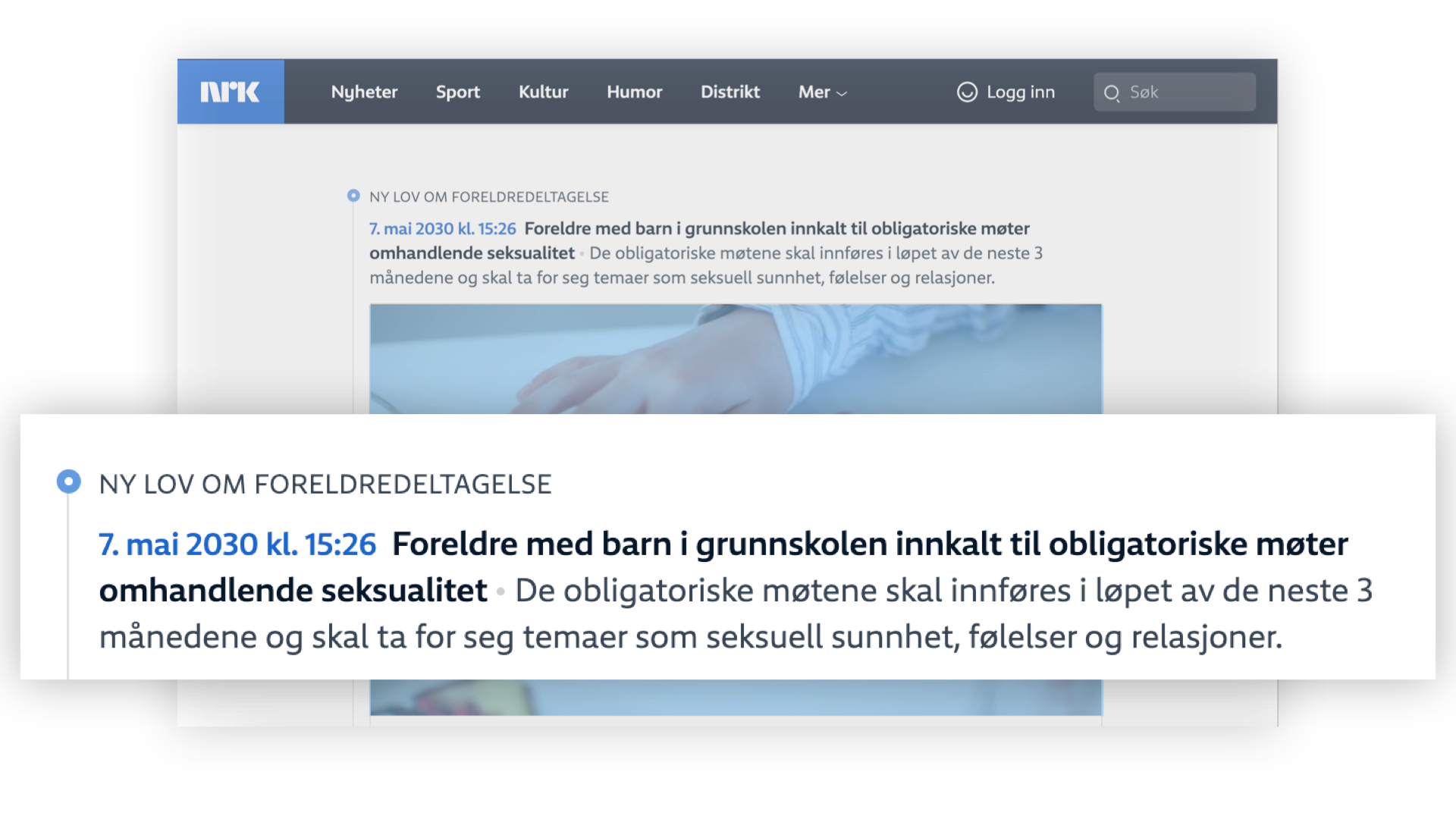
Fictional future artifact for political context
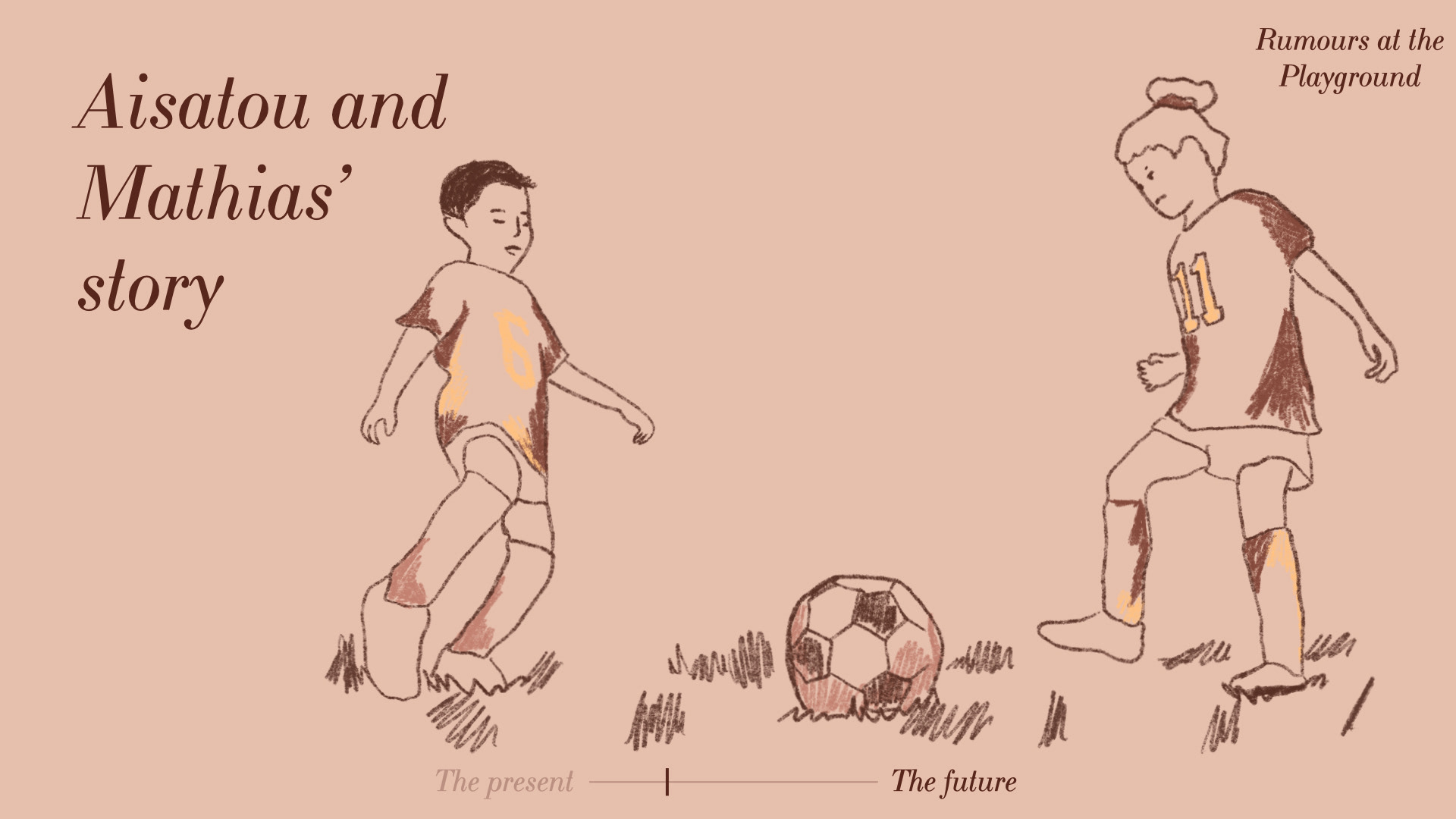
Aisato and Mathias are at football practice and talk about what they did at school today
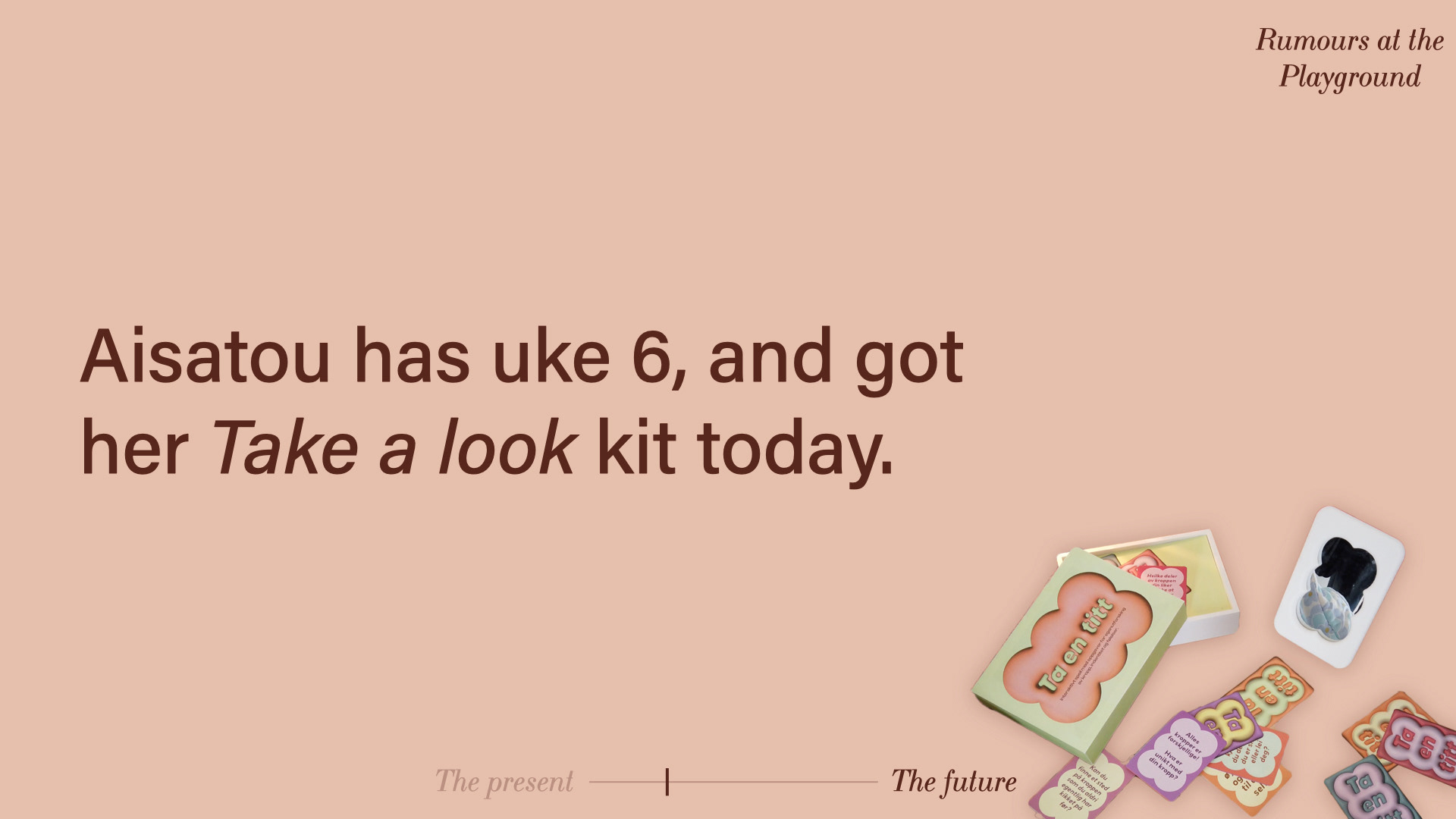
Aisatous class have uke 6 this week, a theme week where they learn about sexuality, she got her «take a look» kit today
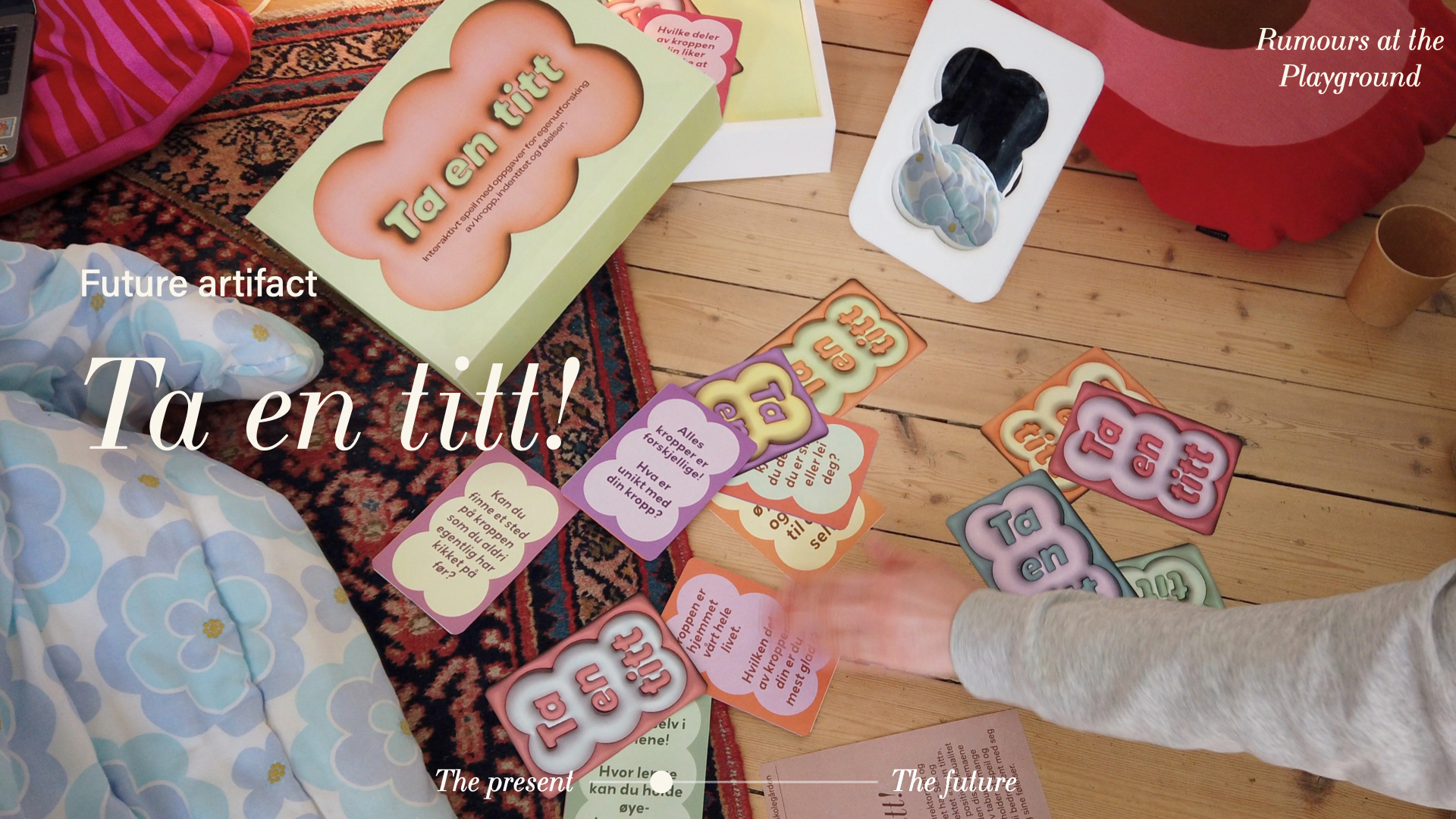
The take a look campaign was developed by sex og politikk with an aim to teach positive sexuality and children sexuality directly to the kids, since talking about these topics was still taboo for many people
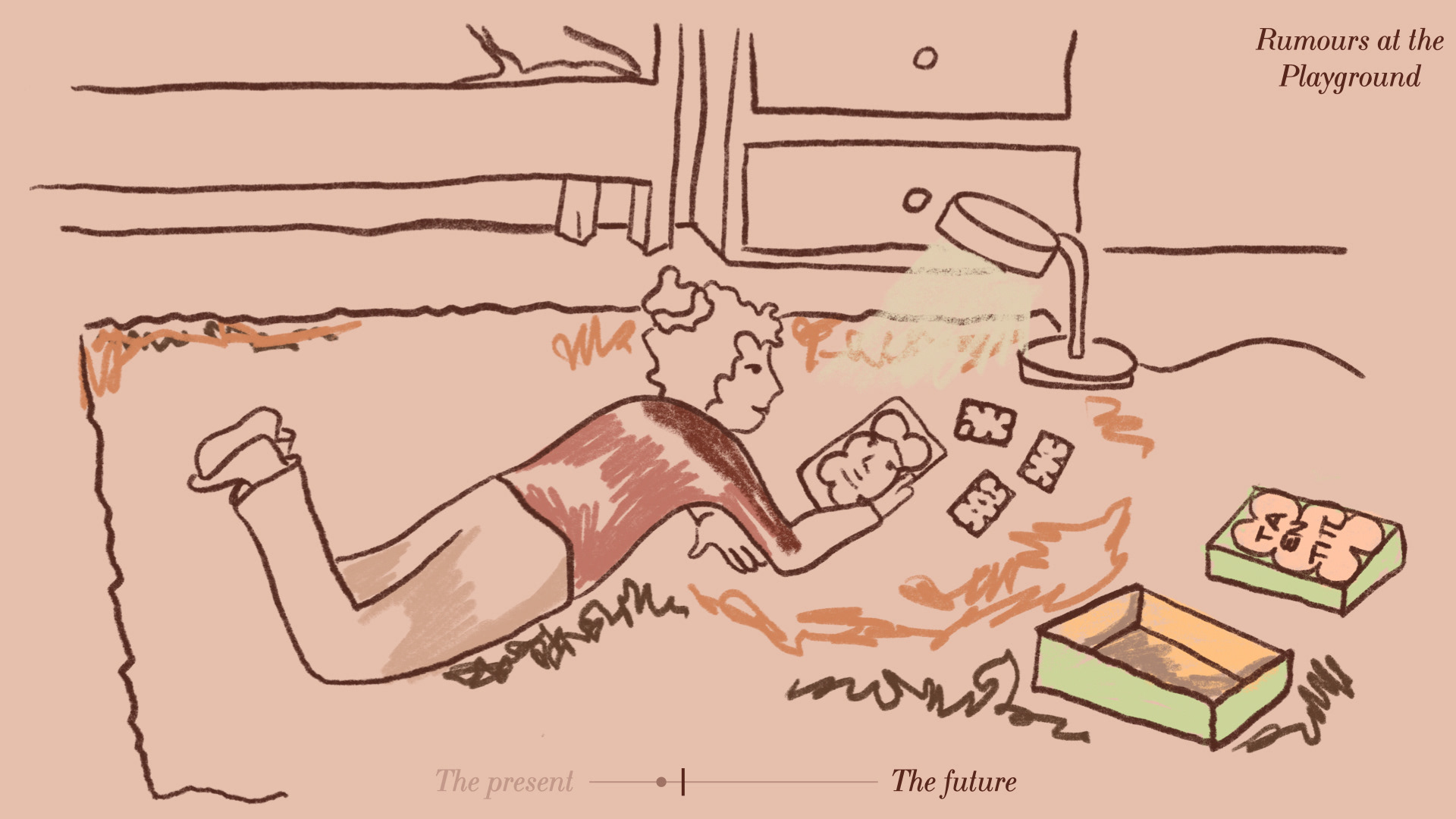
When Aisatou goes home, she learns about positive sexuality, and her body, and gets to know her feelings using the kit
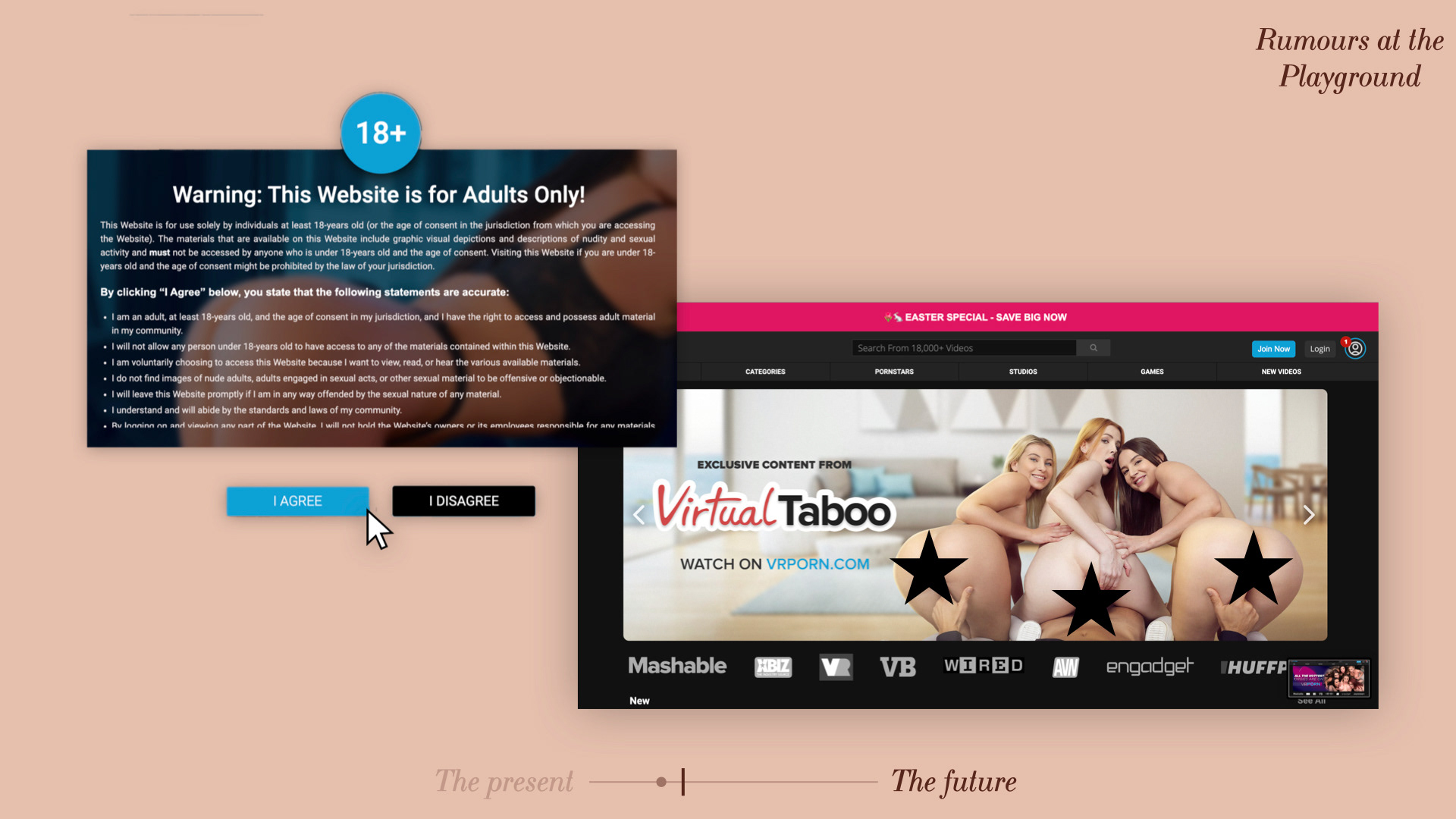
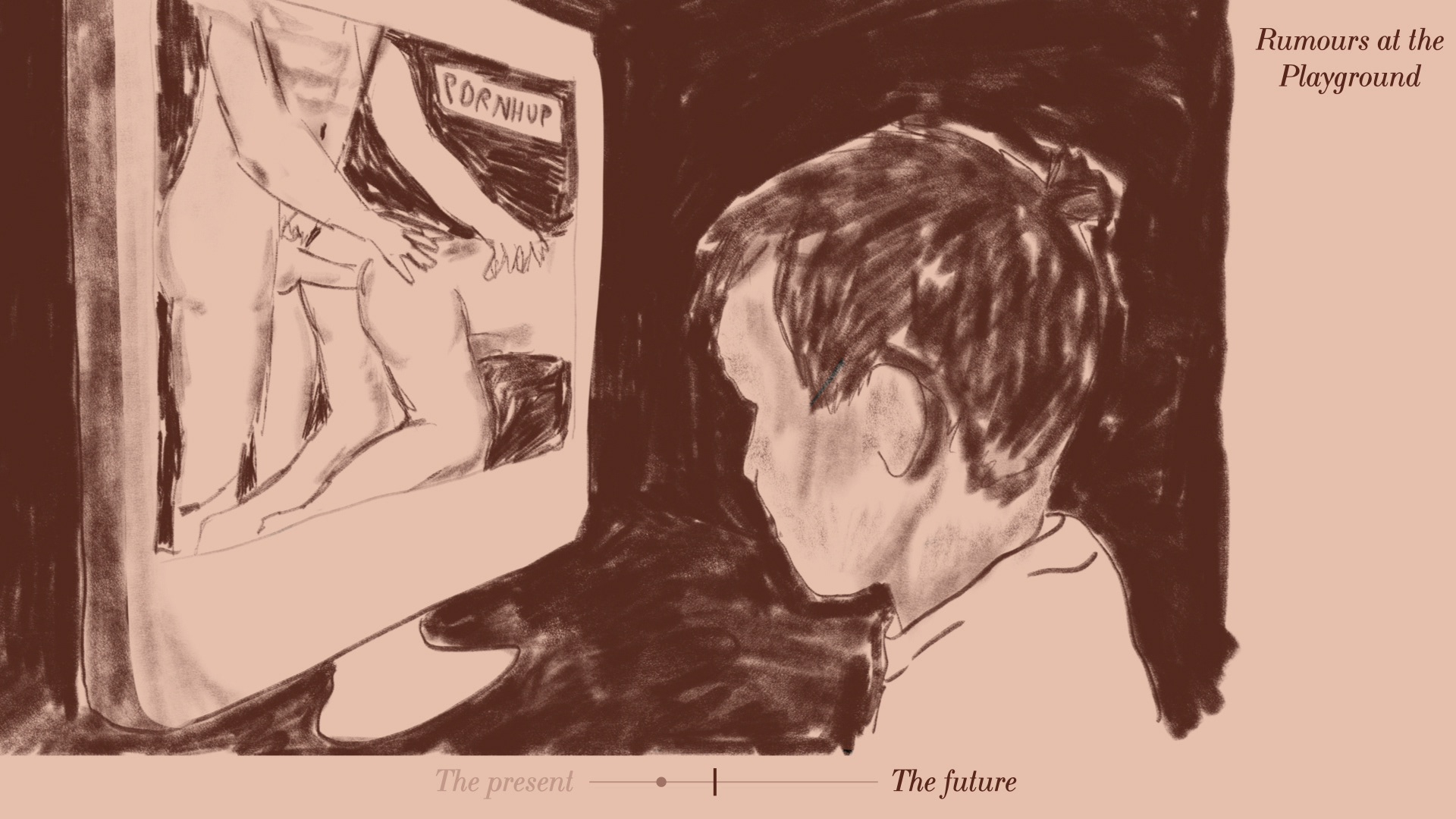
Mathias, on the other hand, goes to a school where they decided to skip uke 6, and is, like many other children, left with few other learning resources than the internet
The  government eventually realized they needed to address this
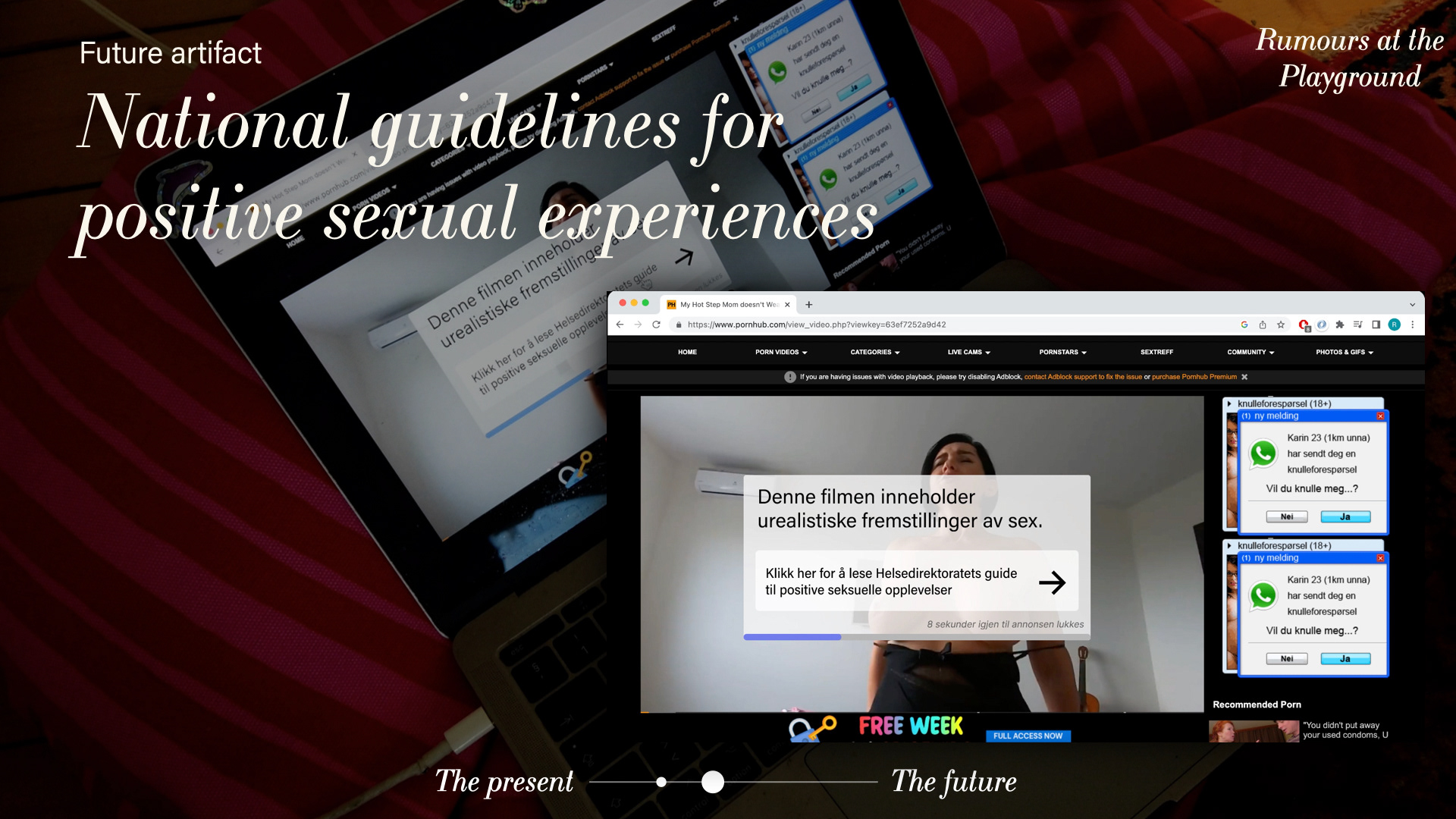
The government eventually realized they needed to address this
Helsedirektoratet therefore launch their new project National guidelines for positive sexual experiences. It is an information portal where kids can learn about topics like sexuality, consent, porn and  communication
Helsedirektoratet therefore launch their new project National guidelines for positive sexual experiences. It is an information portal where kids can learn about topics like sexuality, consent, porn and communication
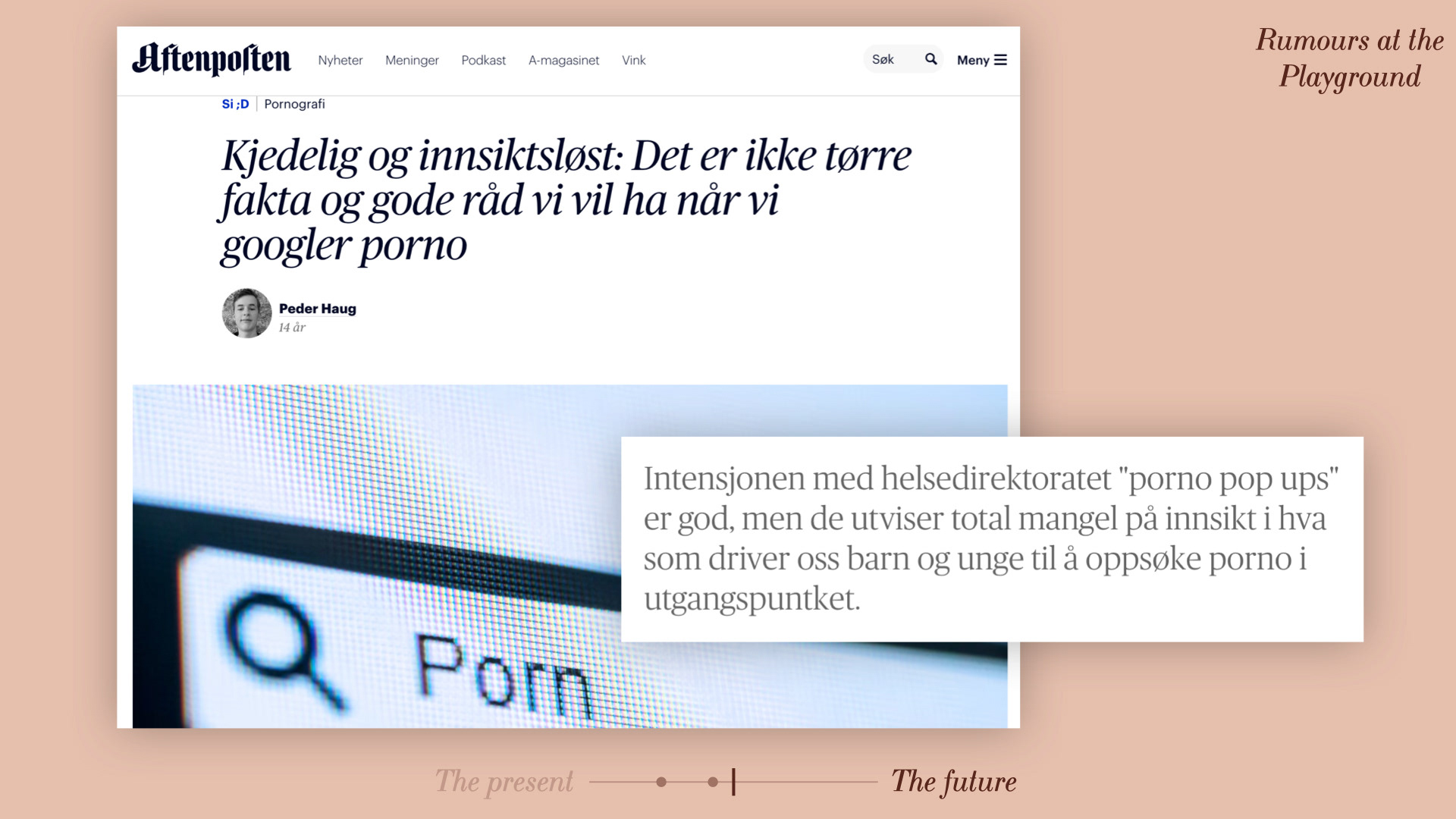
For some children, this guide was helpful, but many others simply found the page too dull and would much rather actually watch porn
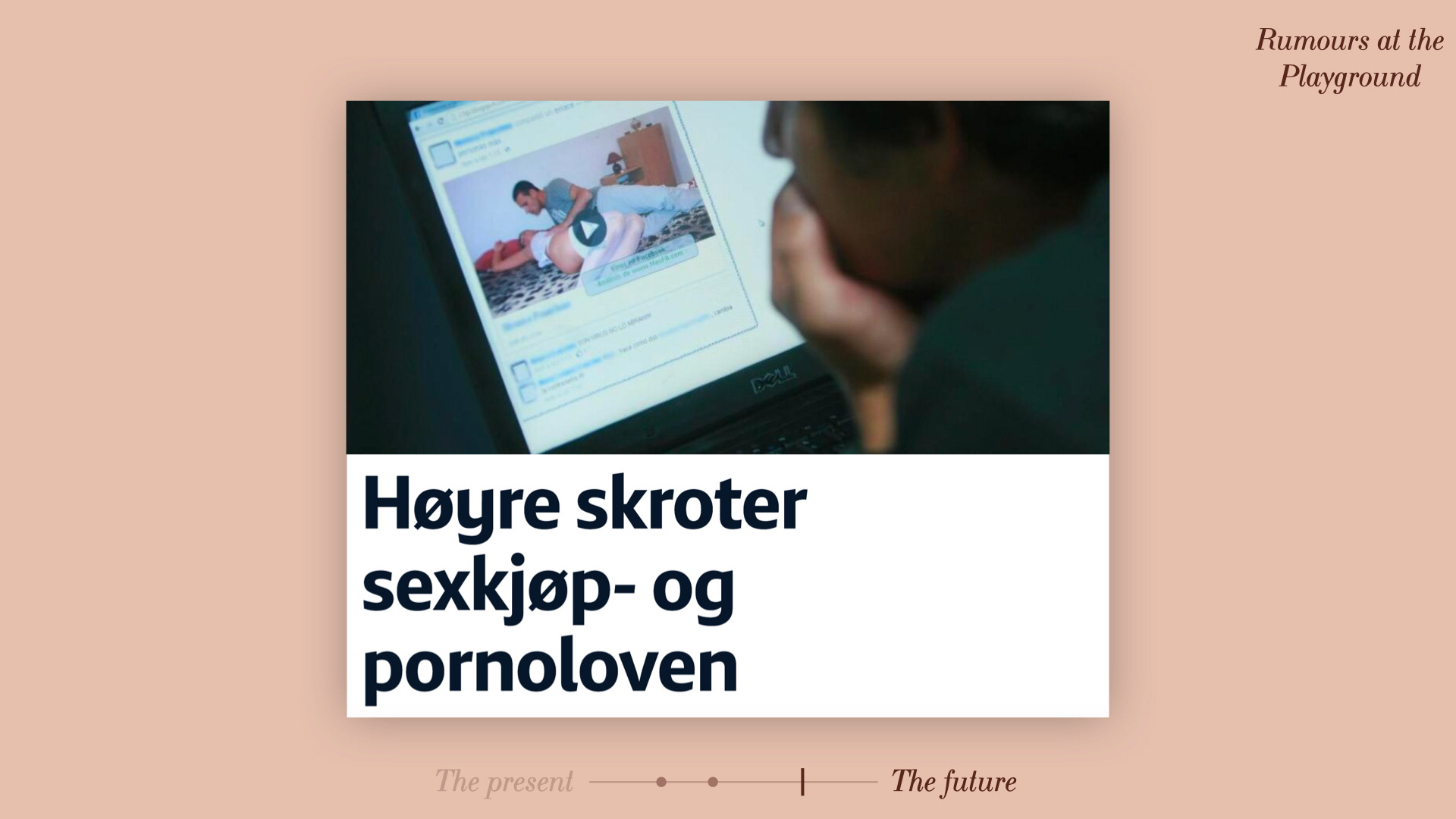
A couple of years later, Høyre passed a bill to decriminalize porn production.
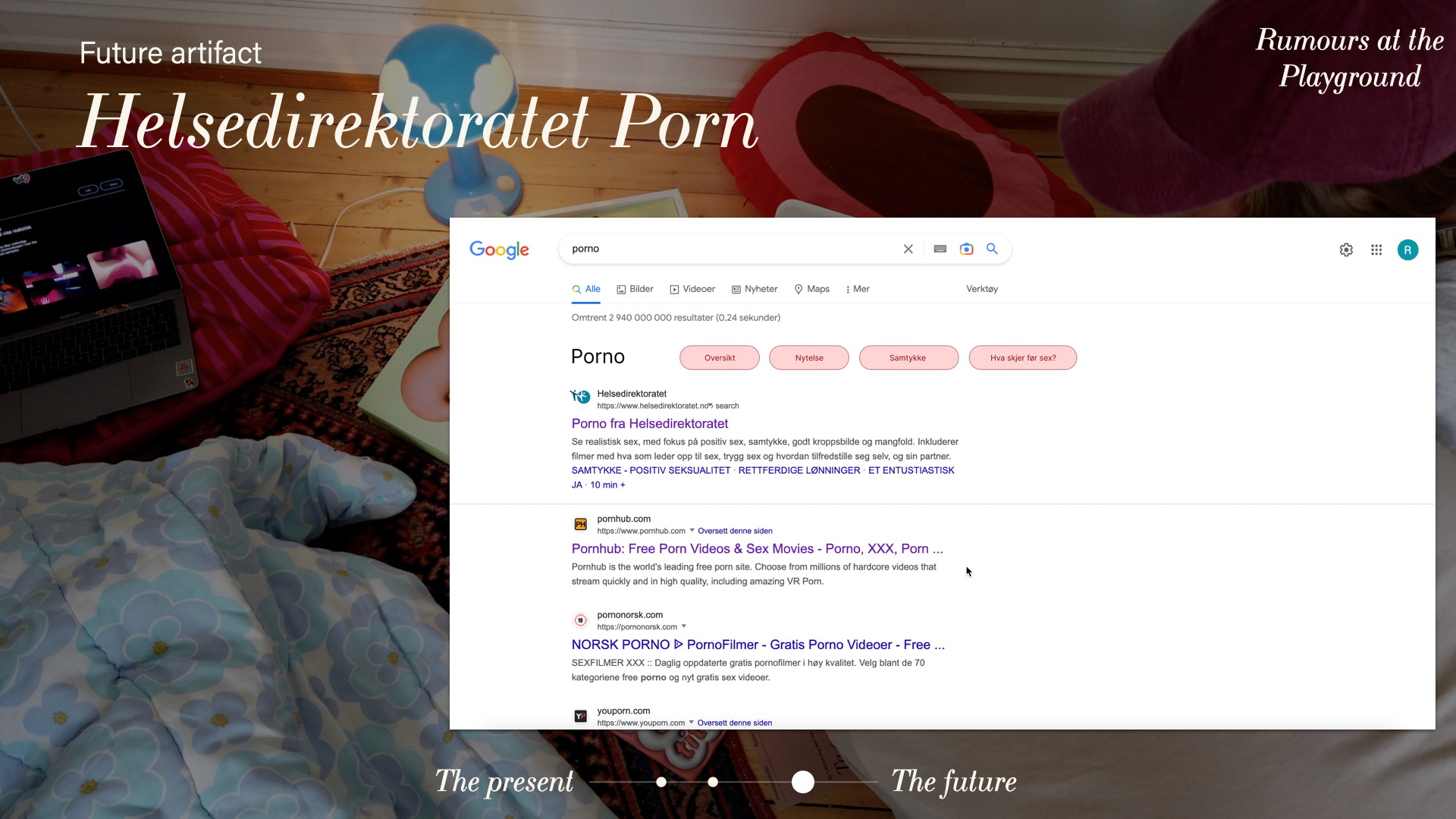
This in turn makes it possible for helsedirektoratet to start producing their own ethical porn, where actors and creators are offered fair wages and have work security. The helsedirektoratet porn has categories like consent and communication and is diverse and inclusive
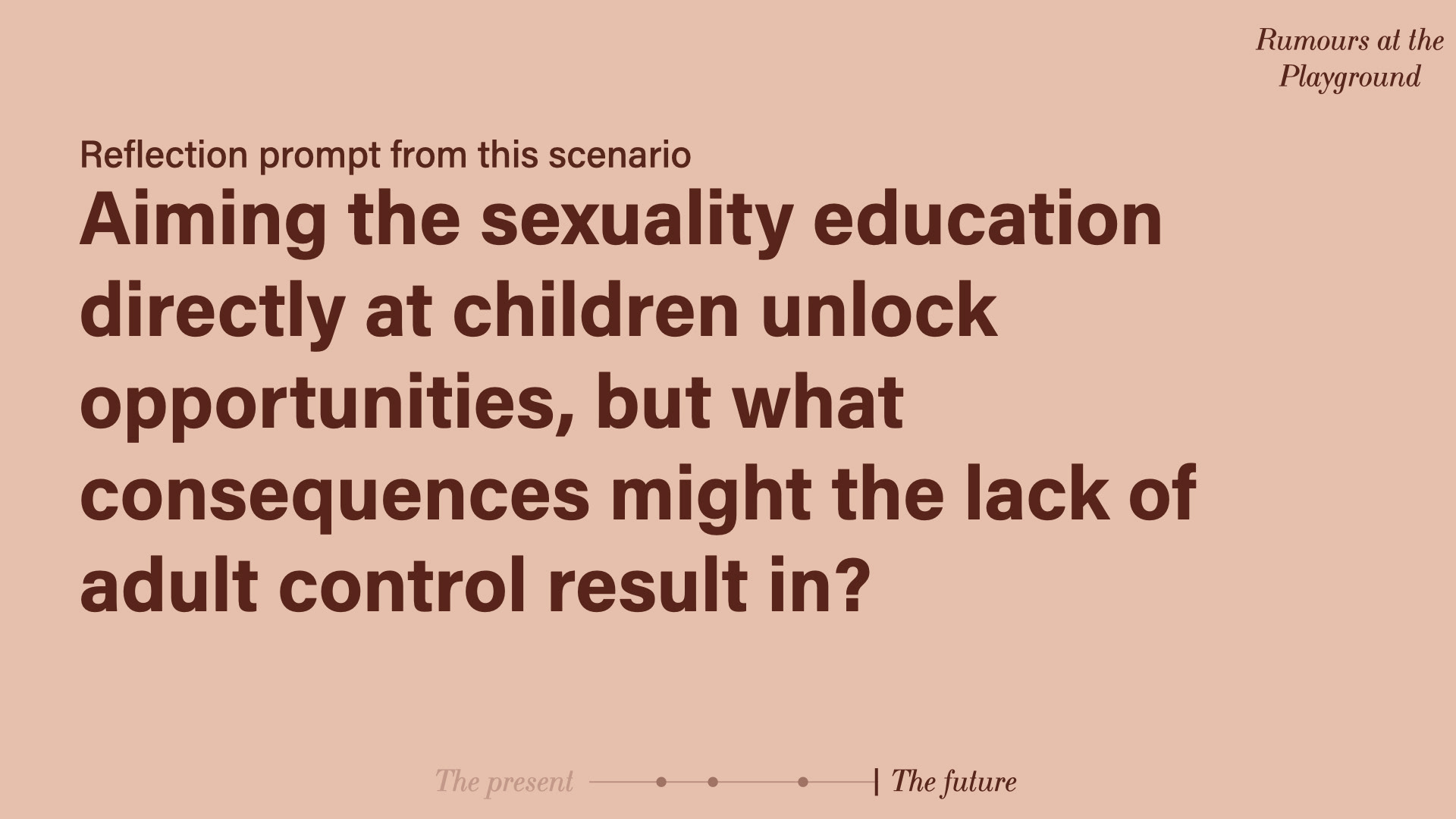
This scenario shows that aiming the sexuality education directly at the kids does unlocks some opportunities, but what unforeseen consequences might this lack of control result in?
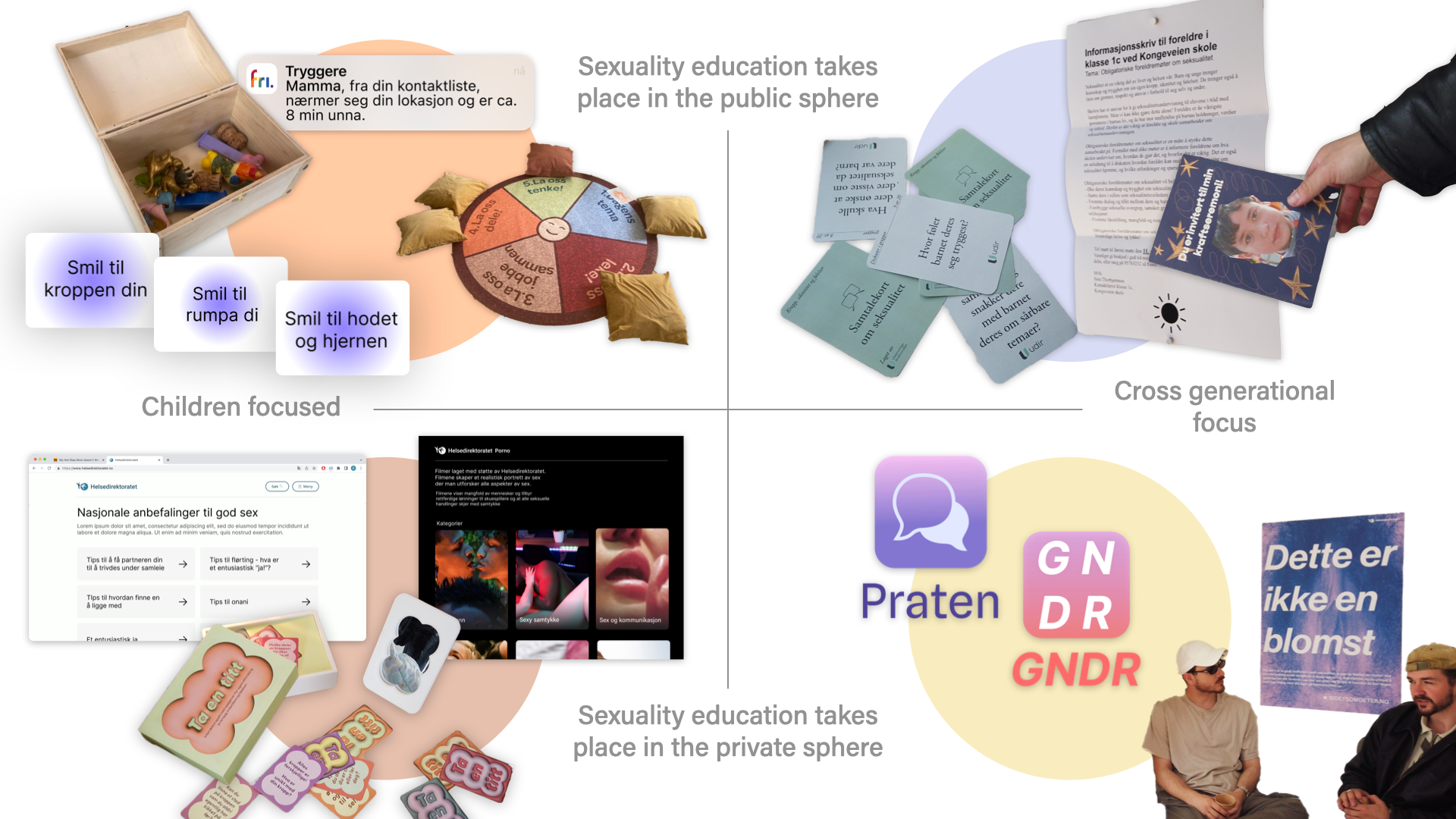
13 future artifacts
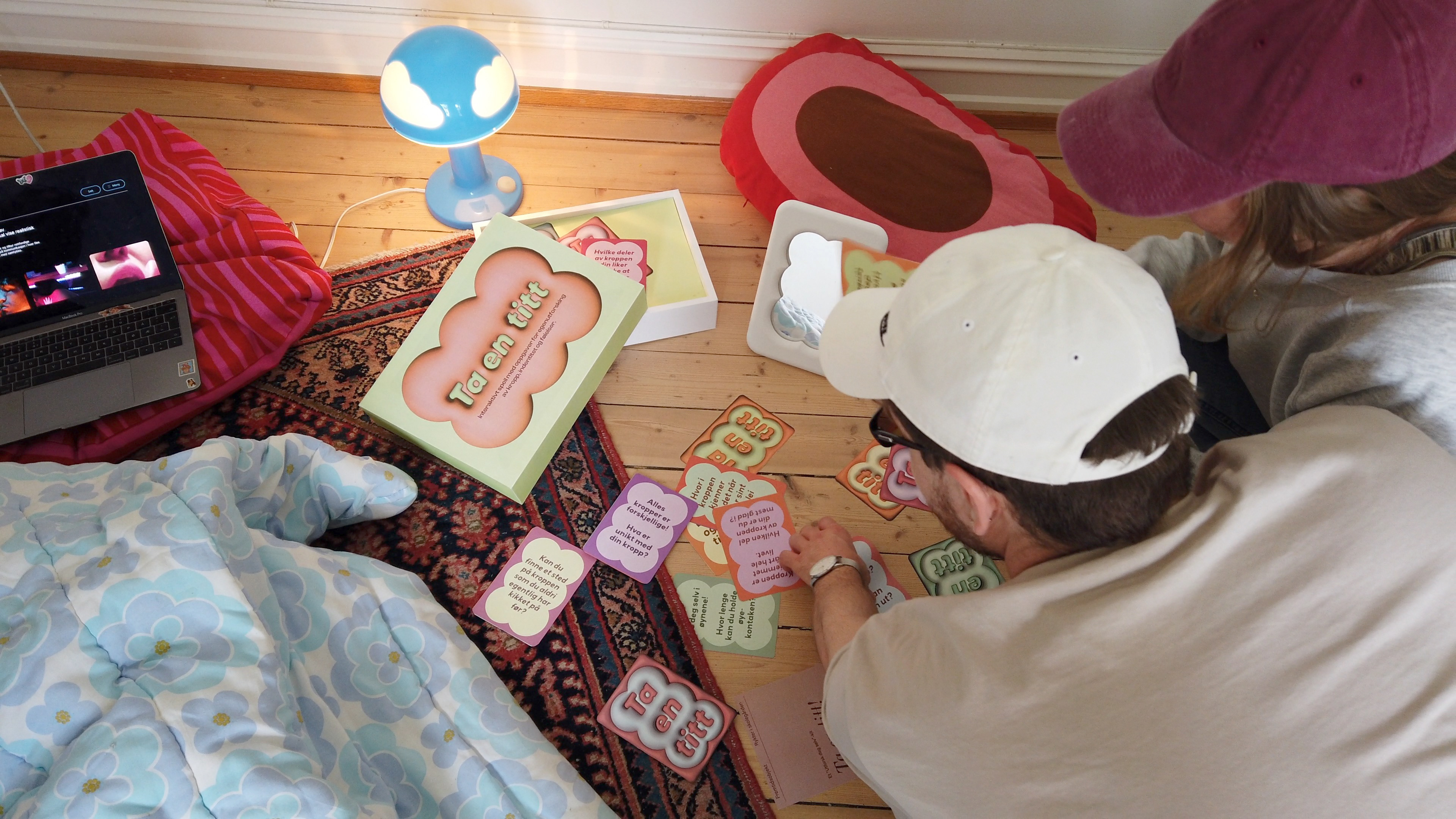
In total, we developed 13 future artifacts, to get a better sense of the touch and feel of everyday life in these futures: the Kraftseremoni, a new type of ritual of passage celebrating individual growth, and sexuality as a natural part of it; conversation cards from UDIR, a tool for parental workshops as an arena for cross-generational learning; the AI assistant Praten, filmed as a working prop in a real kitchen; the Ta en titt! kit, teaching positive sexuality directly to the kids; and the ritual objects of the weekly school subject SKFI — a safe chest, a smile meditation, and a conversation rug for conducting safe dialogues. Some artifacts were deliberately provocative, like Helsedirektoratet Porn, in a future where porn production is decriminalized, with fair wages for actors and categories like consent and communication.

All 13 future artifacts across the four scenarios
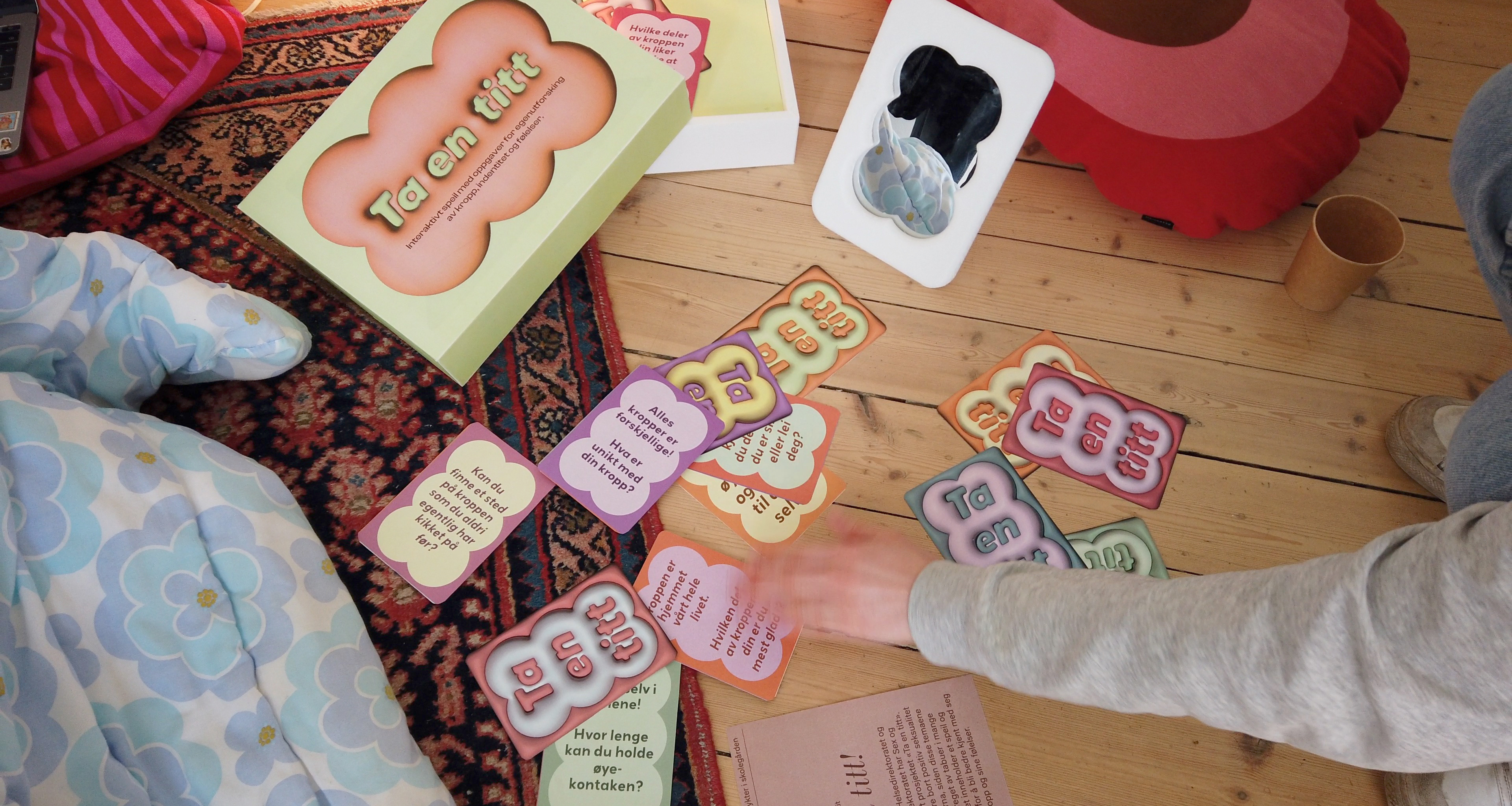
The take a look campaign was developed by sex og politikk with an aim to teach positive sexuality and children sexuality directly to the kids, since talking about these topics was still a taboo for many people. 
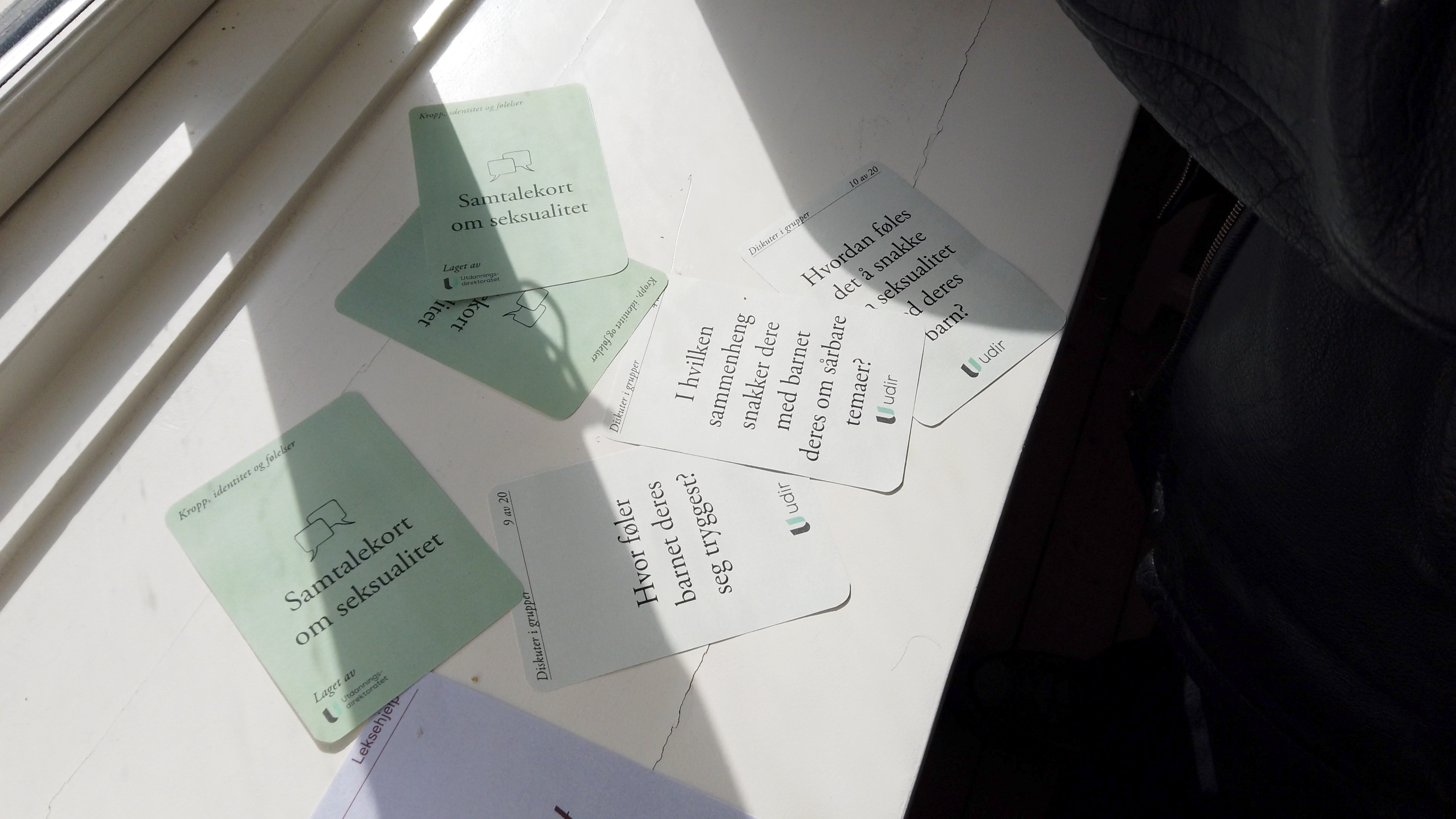
To ease these tensions surrounding sexuality parents use conversations cards from UDIR to reflect on their own sexuality education and knowledge. 
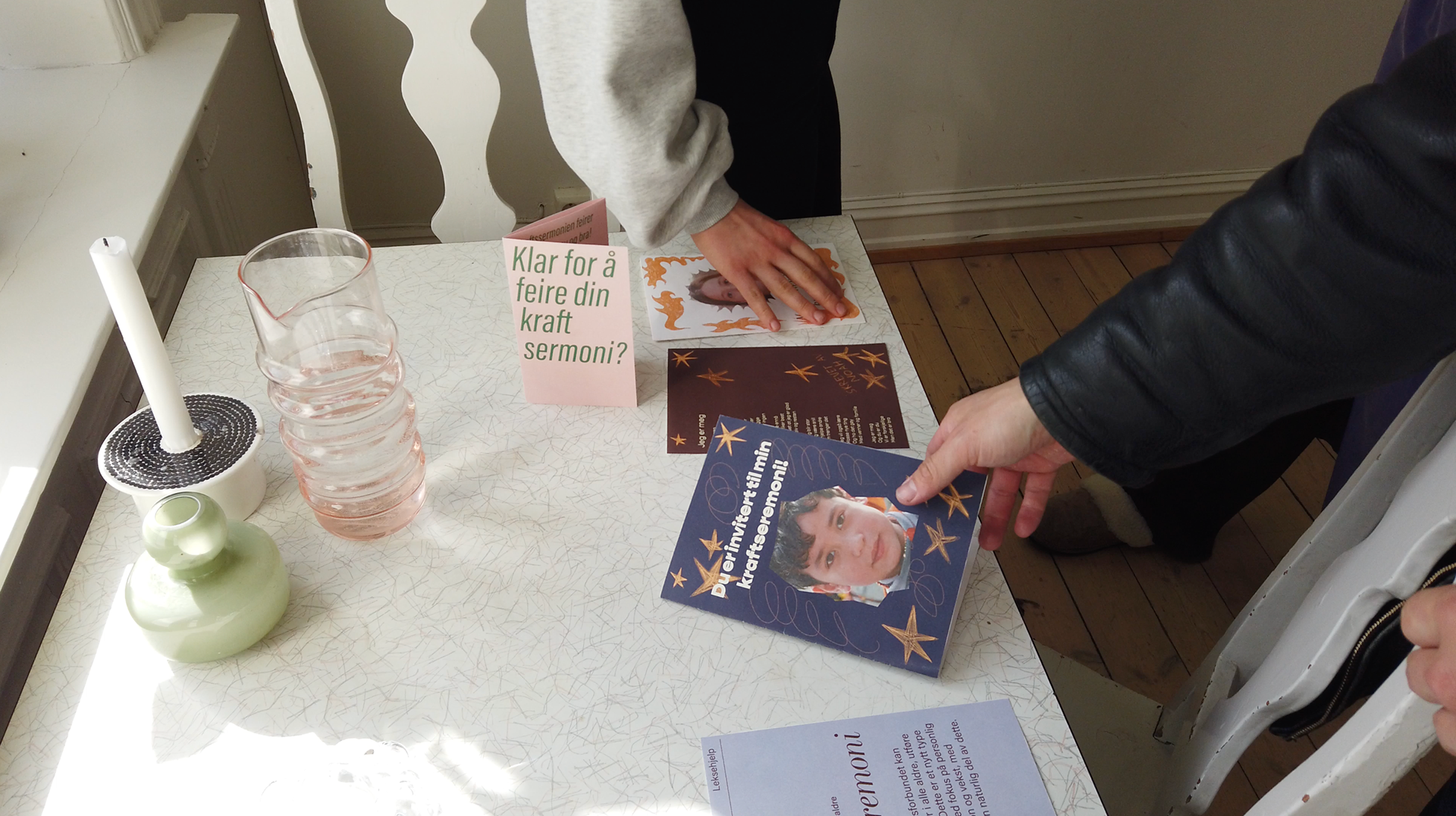
The Kraftseremoni is a new type of ritual of passage, celebrating individual growth, and sexuality as a natural part of it. 
A couple of years into the scenario Chatting Around the Dinner Table, the AI assistant Praten was released. Lets take a look at how this might be experienced. 

How we worked
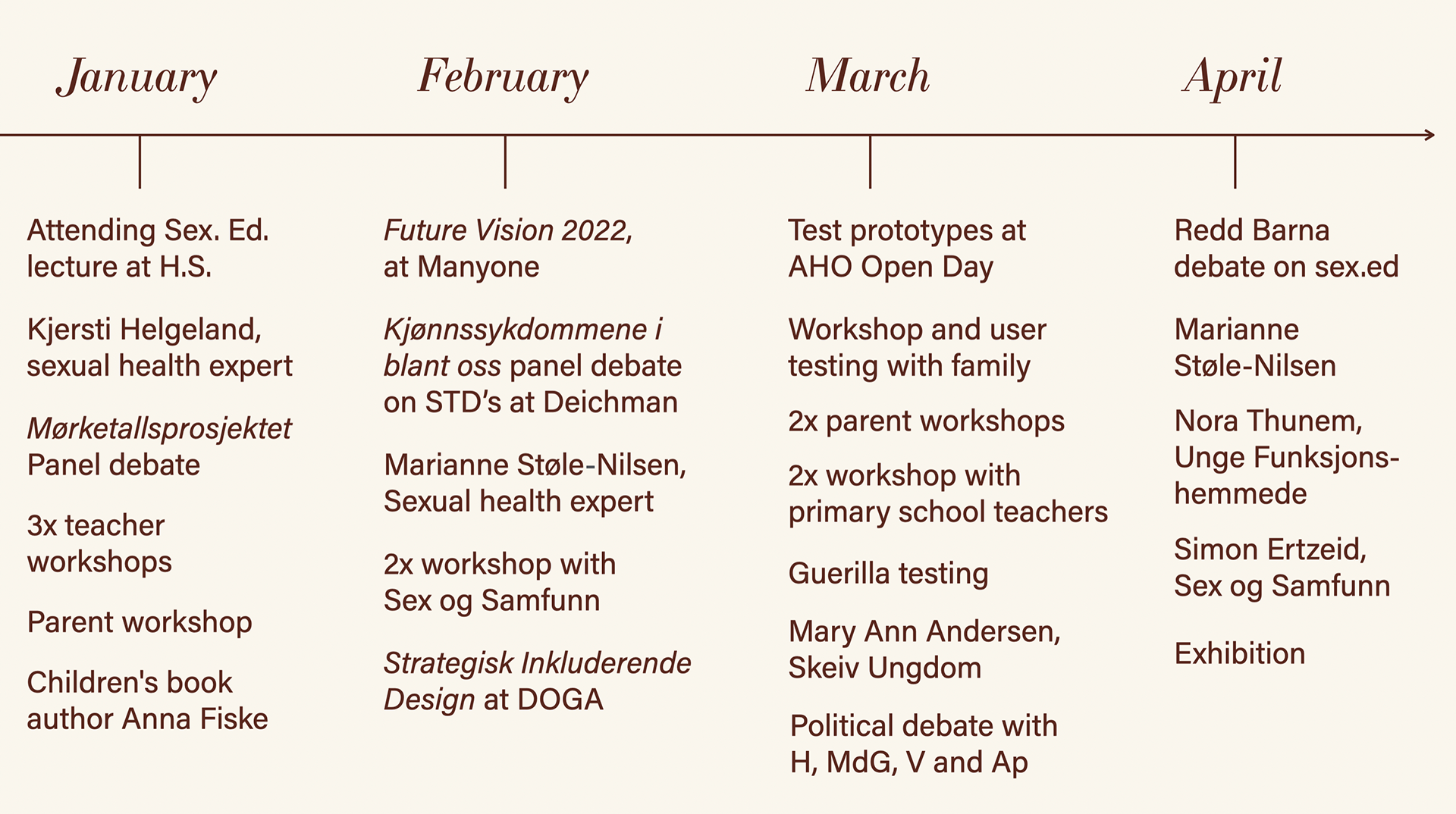
In this diploma, people have been at the centre of our process. We worked with teachers, parents, experts and organizations, and attended lectures, talks and political debates to keep up with the status quo.
Phase one: Building understanding. The first phase of user involvement was used to gain a deeper understanding of the context, challenges and possibilities of sexuality education in Norway. We conducted insight interviews with teachers and parents, visited a primary school, attended a sex ed lecture in high school, and interviewed an expert on children's sexuality and a children's book author. These sessions were also the beginning of our co-creative process: we used what if-exercises to get into the mindset of future possibilities, and used the what ifs as prompts for ideating with the users and stakeholders we met. Based on this, we built our first future narrative draft.

Four months of interviews, workshops, debates and testing.
Who we worked with, and when.
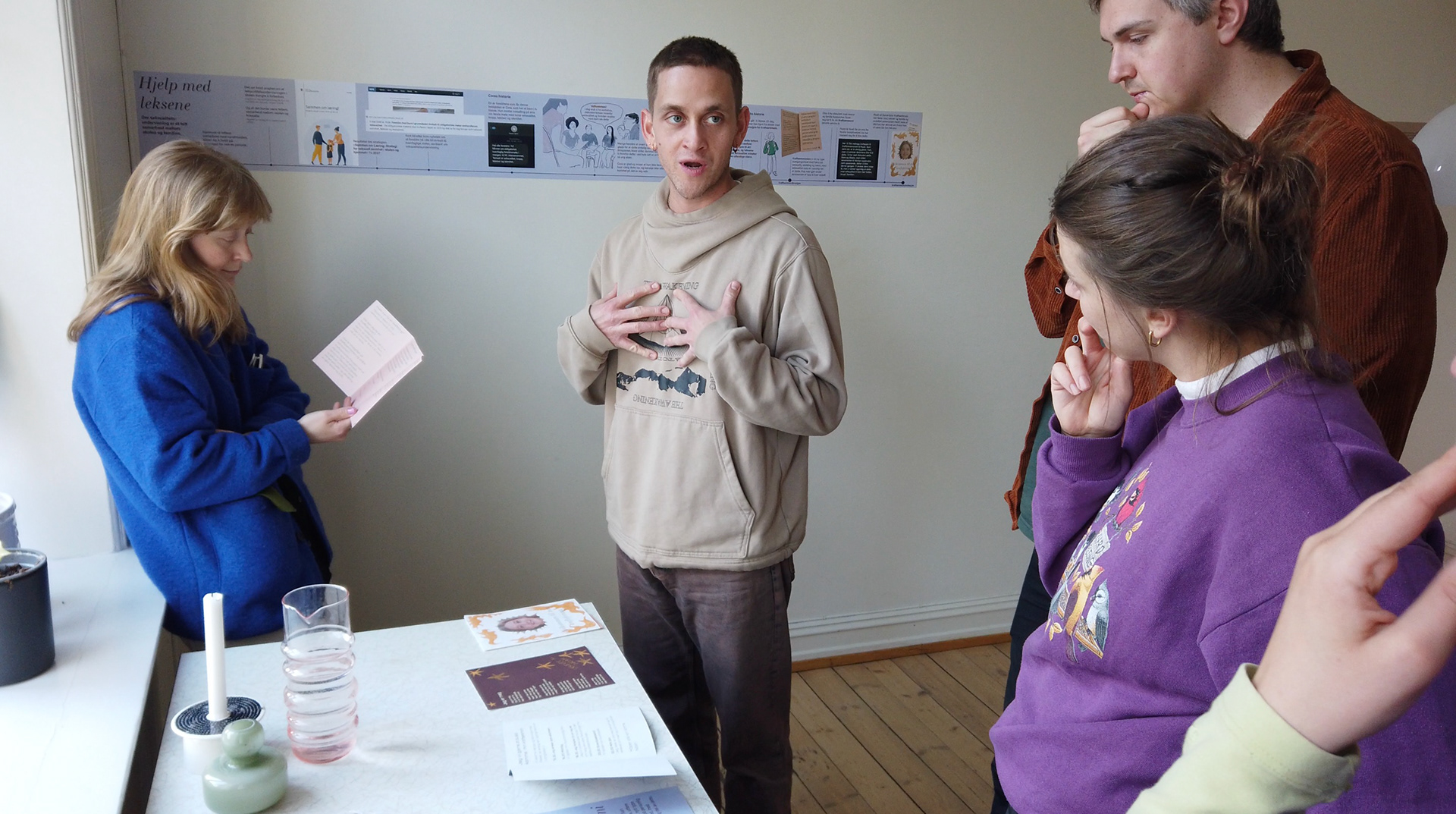
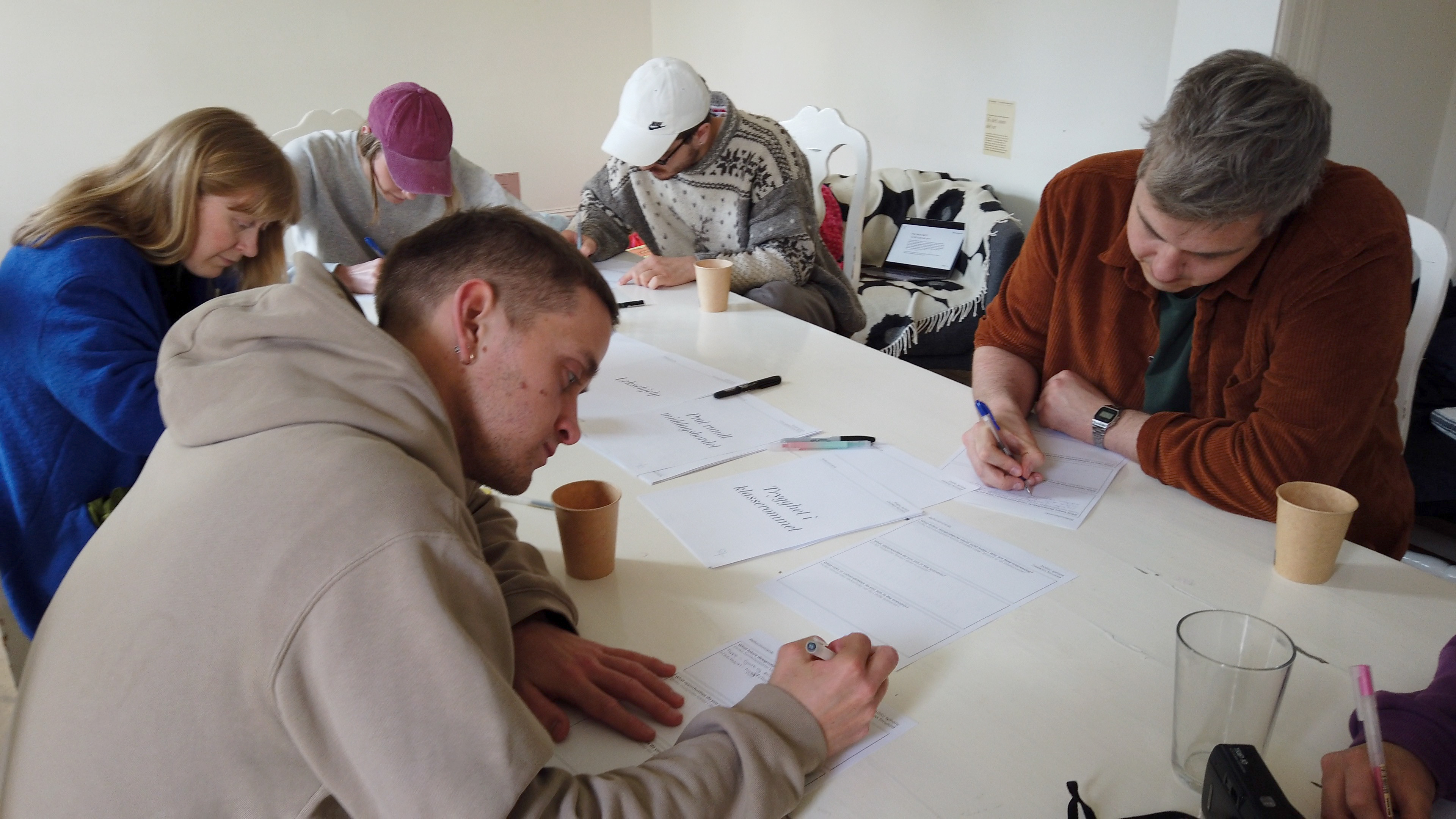
Phase two: Co-creation. Through co-creation, that draft evolved into the four final scenarios. We hosted workshops with Sex og samfunn, Skeiv Ungdom, Unge Funksjonshemmede, several teachers, parents, and a sex ed educator for teacher students. 
The physical objects were a way to make the future scenarios tangible when co-creating with non-designers. In these workshops we tested and iterated on three aspects of our future speculations:
Artifacts What would need to be in place for this artifact to be accepted? Who would deliver this artifact or service?
Reactions How would you feel or react in this situation, or faced with this artifact? What are the vulnerabilities or opportunities?
Narratives How would you feel discussing sexuality with children in this future? What groups might risk facing outsiderness in this scenario?
Validating the tool
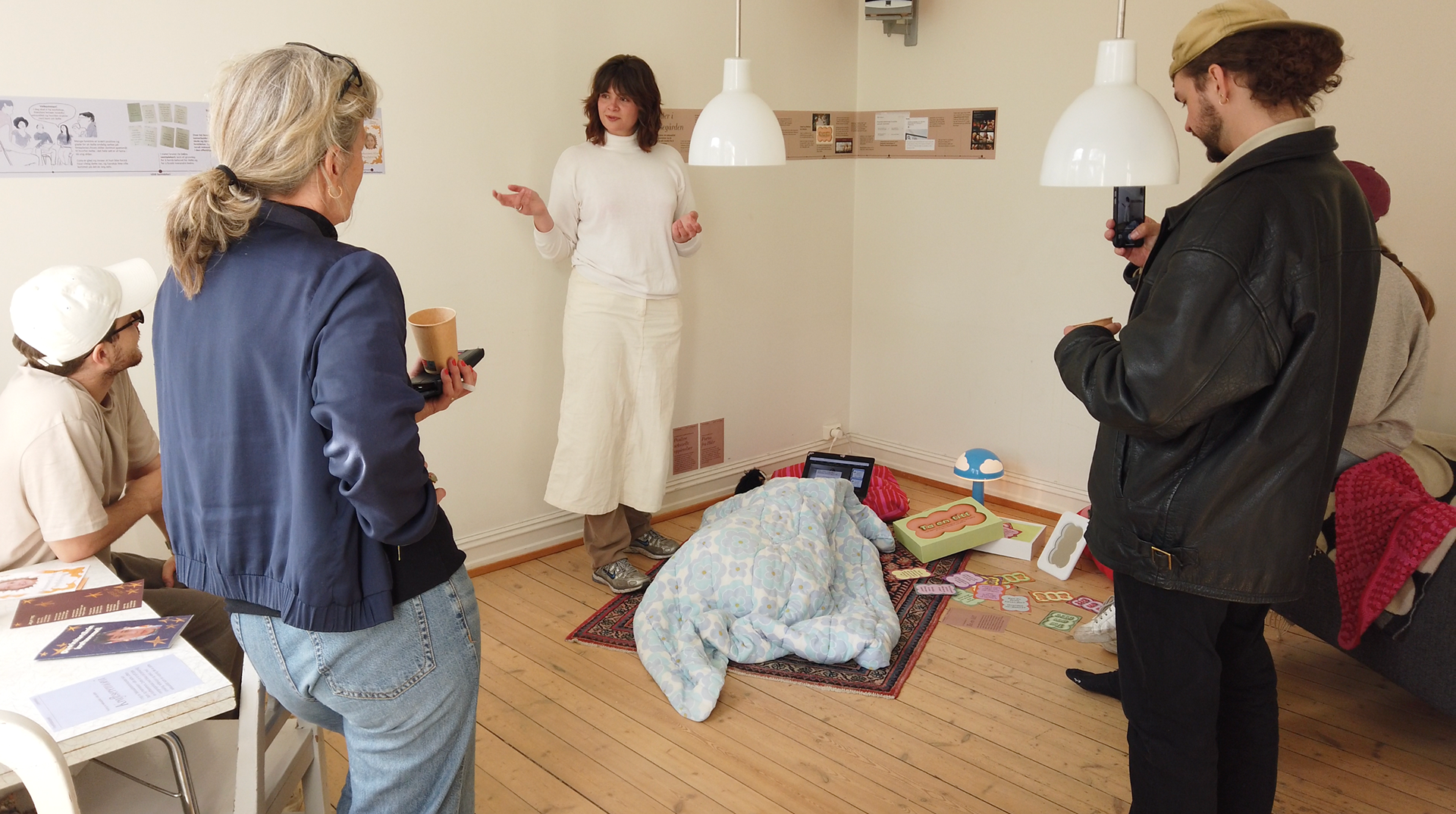
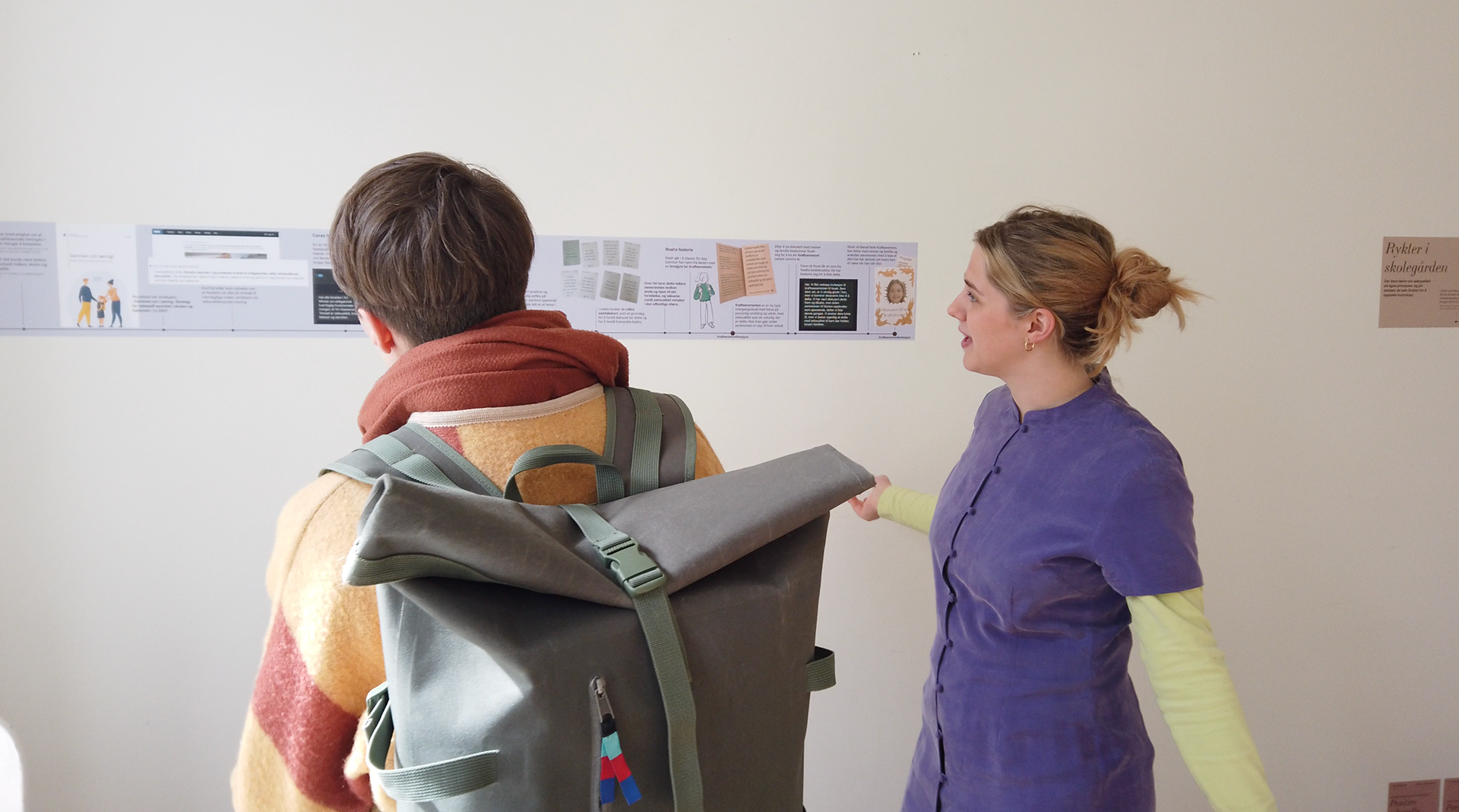
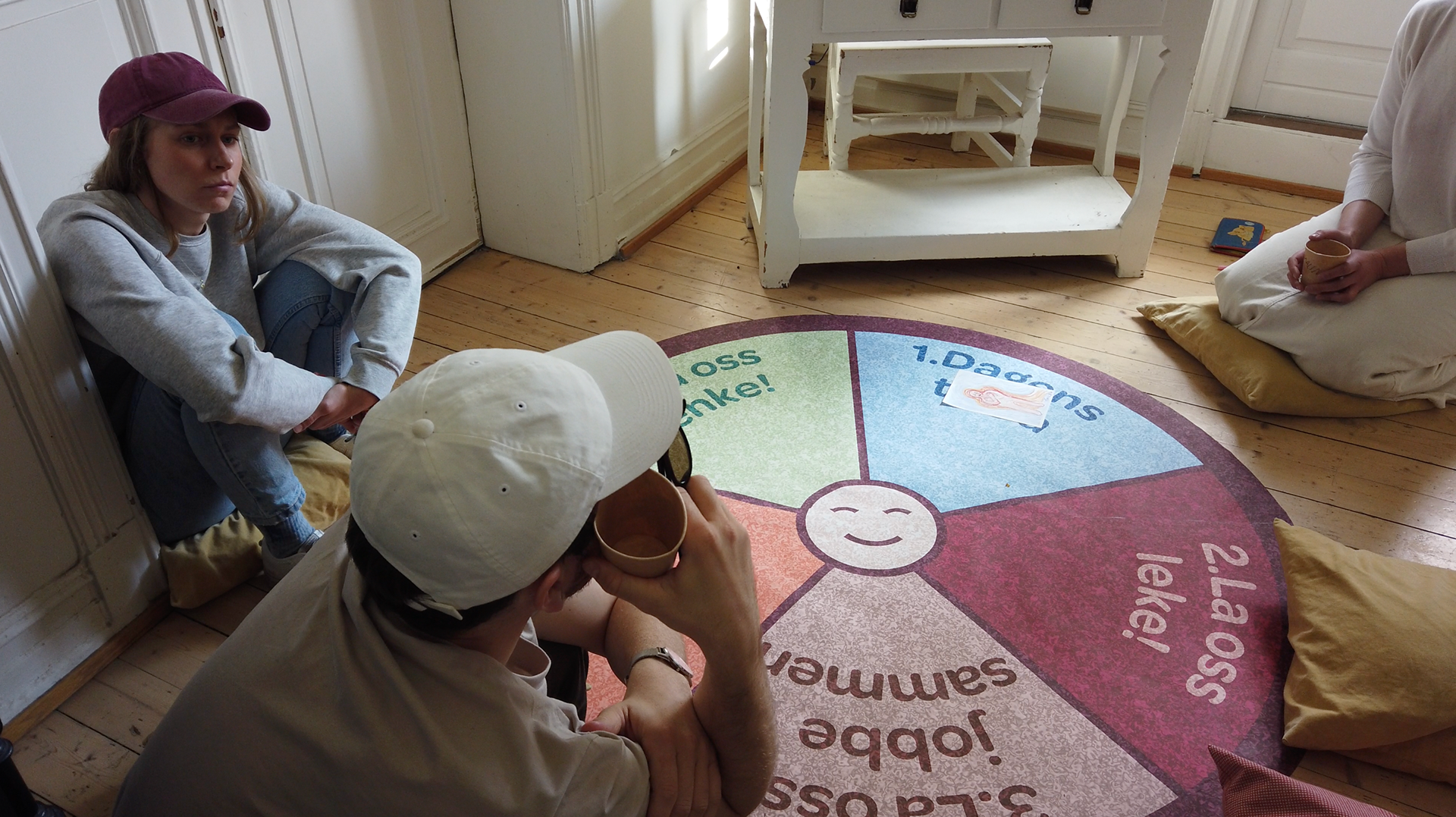
The co-creative process was in itself a test of the scenarios' ability to spark discussion, but we wanted to see how the tool would perform on a bigger scale. That is why we hosted an exhibition, inviting teachers, parents and experts along with people from the general public. The scenarios could be experienced as four future interiors with corresponding timelines, the design fiction artifacts placed in a natural context, and we guided the visitors through one scenario at a time.
Afterwards, we initiated dialogues — and they became a much larger part of the exhibition than we expected. People had a lot of thoughts on our narratives, the discussions quickly became political, and some future artifacts generated disagreement and debate. Visitors also shared their own personal experiences with sexuality and sexuality education. To collect the key takeaways of these discussions, visitors filled out reflection sheets. To us, the open and fruitful dialogues indicated that the scenarios were successful as a tool for reflection.
Translating the exhibition into something lasting
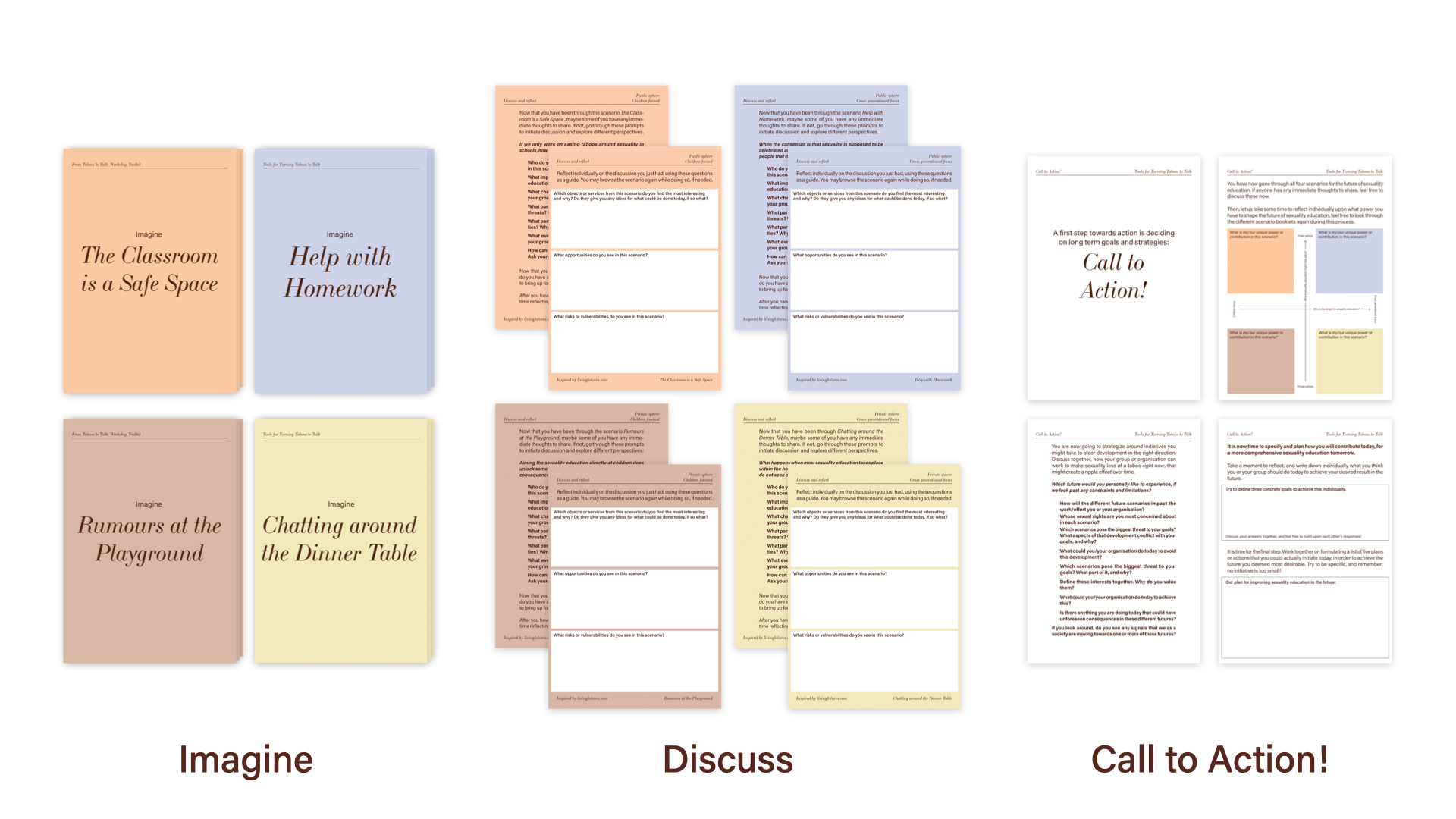
These discussions inspired us, and we set out to turn the scenarios, and the tool they provide, into something that can live on. The result is the workshop kit Tools for Turning Taboos to Talk, designed to provide the same kind of experience as the exhibition, but adding a final step, urging participants to take action. The printable kit consists of three parts: Imagine, where participants are taken through one scenario at a time through visual and textual storytelling; Discuss, which opens up for a free and fruitful dialogue while participants are in a mind space less focused on what is, and more on what might be; and Call to Action, a starting point for strategizing and planning — a first step towards action. 
The kit is available to everyone at taboostotalk.com, along with instructions for workshop facilitators.
Who will use this tool?
Throughout the project we co-created with several interest organizations who work to improve sexuality education by influencing political decisions in, for instance, Utdannings- og Helsedirektoratet. The tool can be used internally in these organizations to identify risks and opportunities and develop strategies, and to reach agreement and empathize with user needs during decision making across organizational layers.

Final thoughts
We saw that our exhibition opened up a safe space for discussion and reflection — and that is what we hoped to achieve with From Taboos to Talk: to challenge people to reflect upon the taboos surrounding sexuality, the sexuality education they themselves received, and what coming generations deserve. Hopefully, we lowered the threshold for these important conversations just a little bit.
Back to Top