Matmøter
Matmøter is a joint cooperation between local schools and elderly centers that facilitate for meetings across generations, with food as the common ground.
Seniors contribute with their knowledge about traditional food, through an eight week cross disciplinary project.
The project will function as a social arena, tying the local community closer together and contributing to lowering loneliness among elders.
Where The Oslo School of Architecture and Design, in cooperation with Engelsborg elderly centre and Vahl primary school
When 2020
Team Two designers: Bendik Vestre and myself
My role User research, service design, creating user journeys and service map
Result A complete service framework with five material touchpoints, a service owner in Kirkens Bymisjon, and a pilot set up with Engelsborg elderly centre and Vahl primary school, cancelled due to Covid
The brief and where it took us
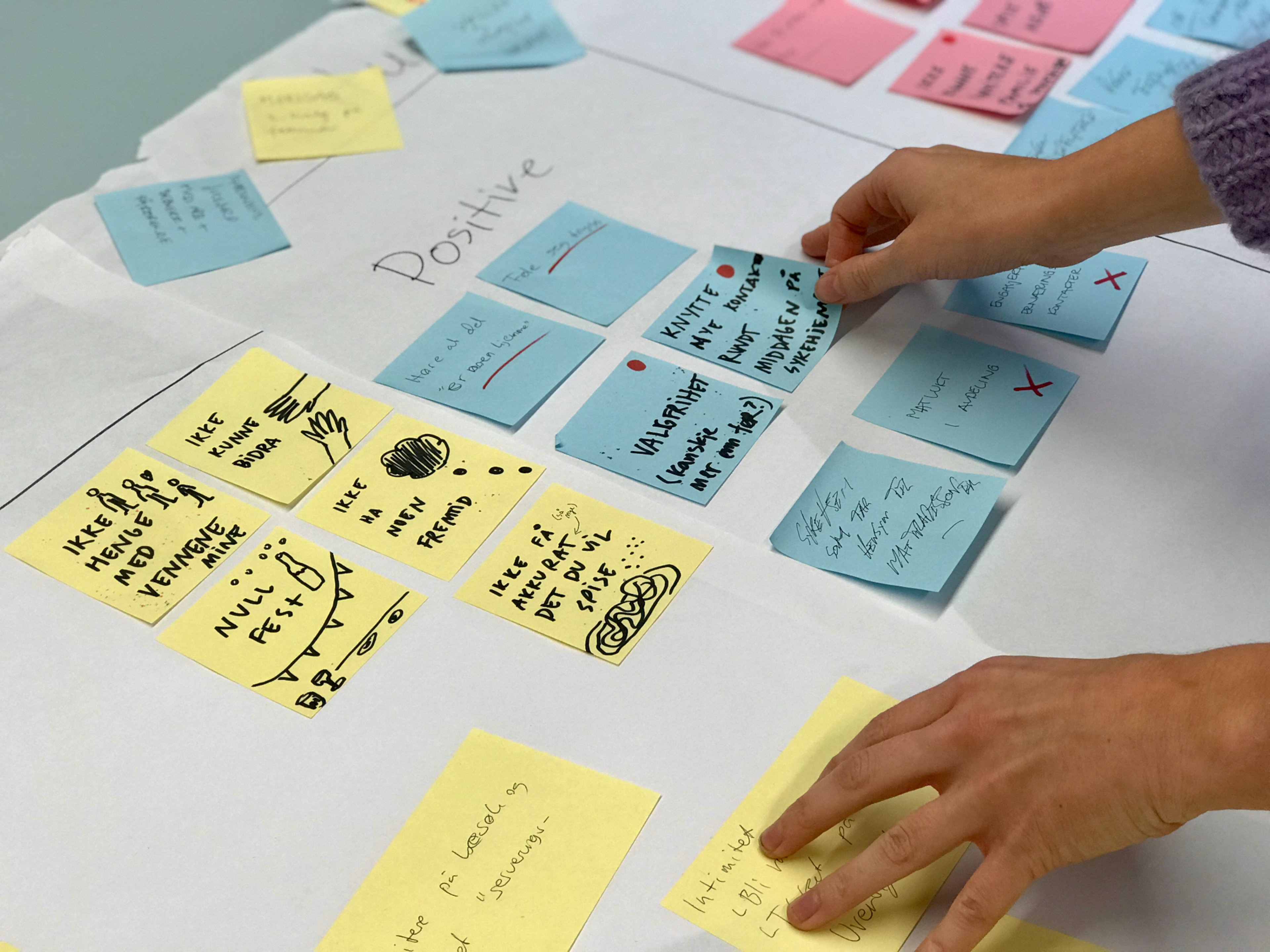
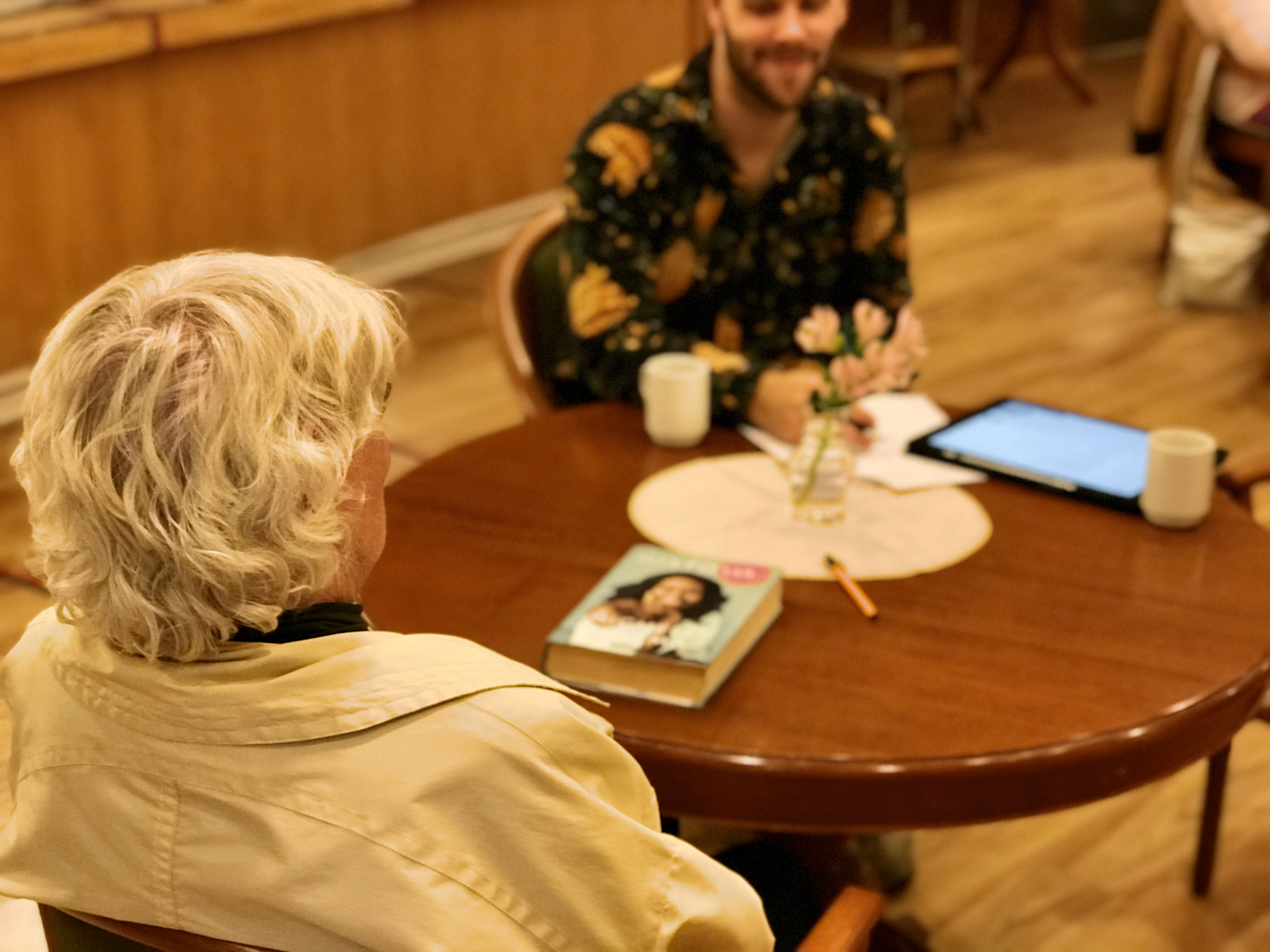
We started from a broad brief: public meals, with seniors as the user group. Through interviews, observations, probes and desktop research, four insights kept surfacing, and two of them pointed somewhere we had not expected.
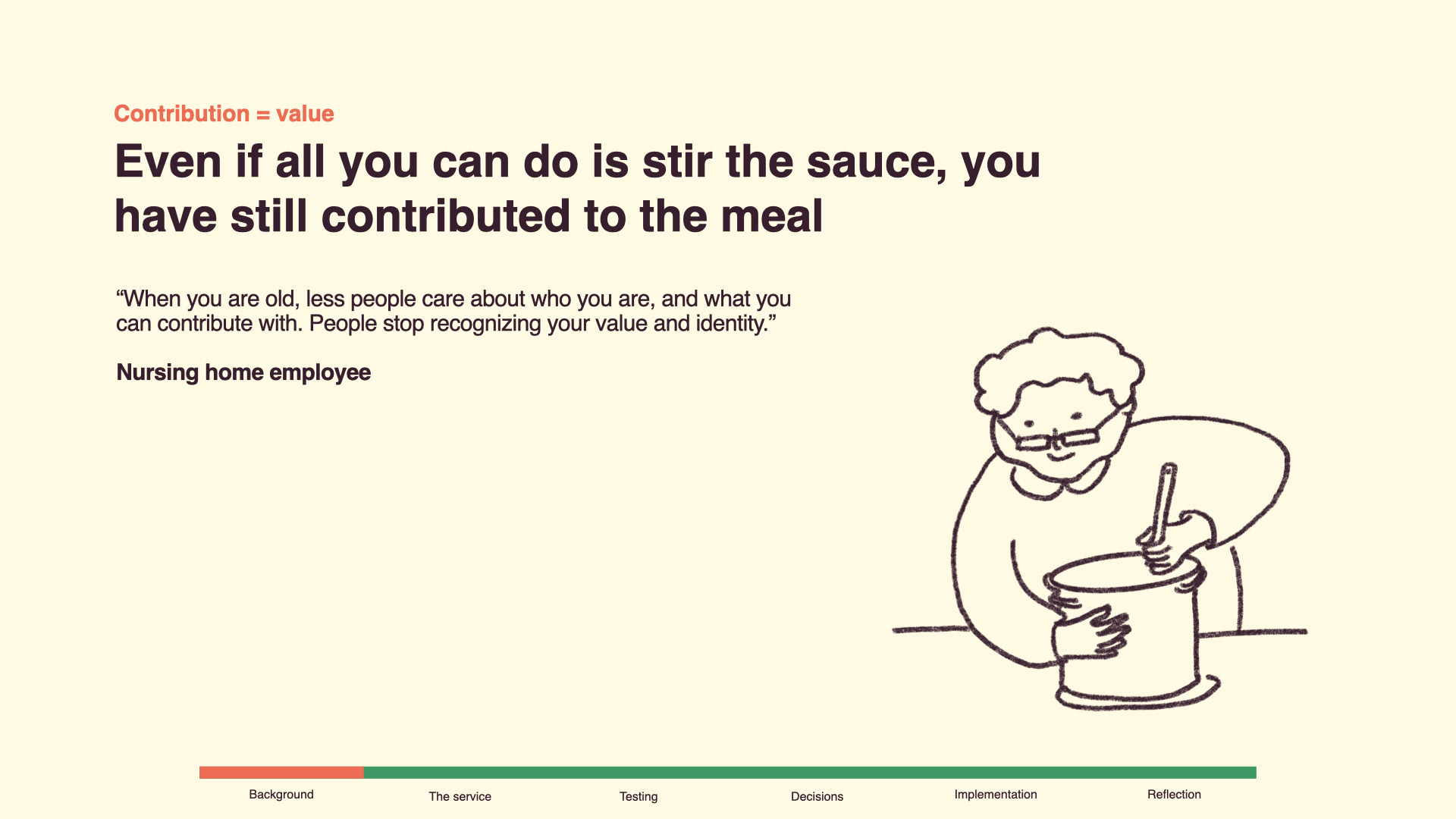
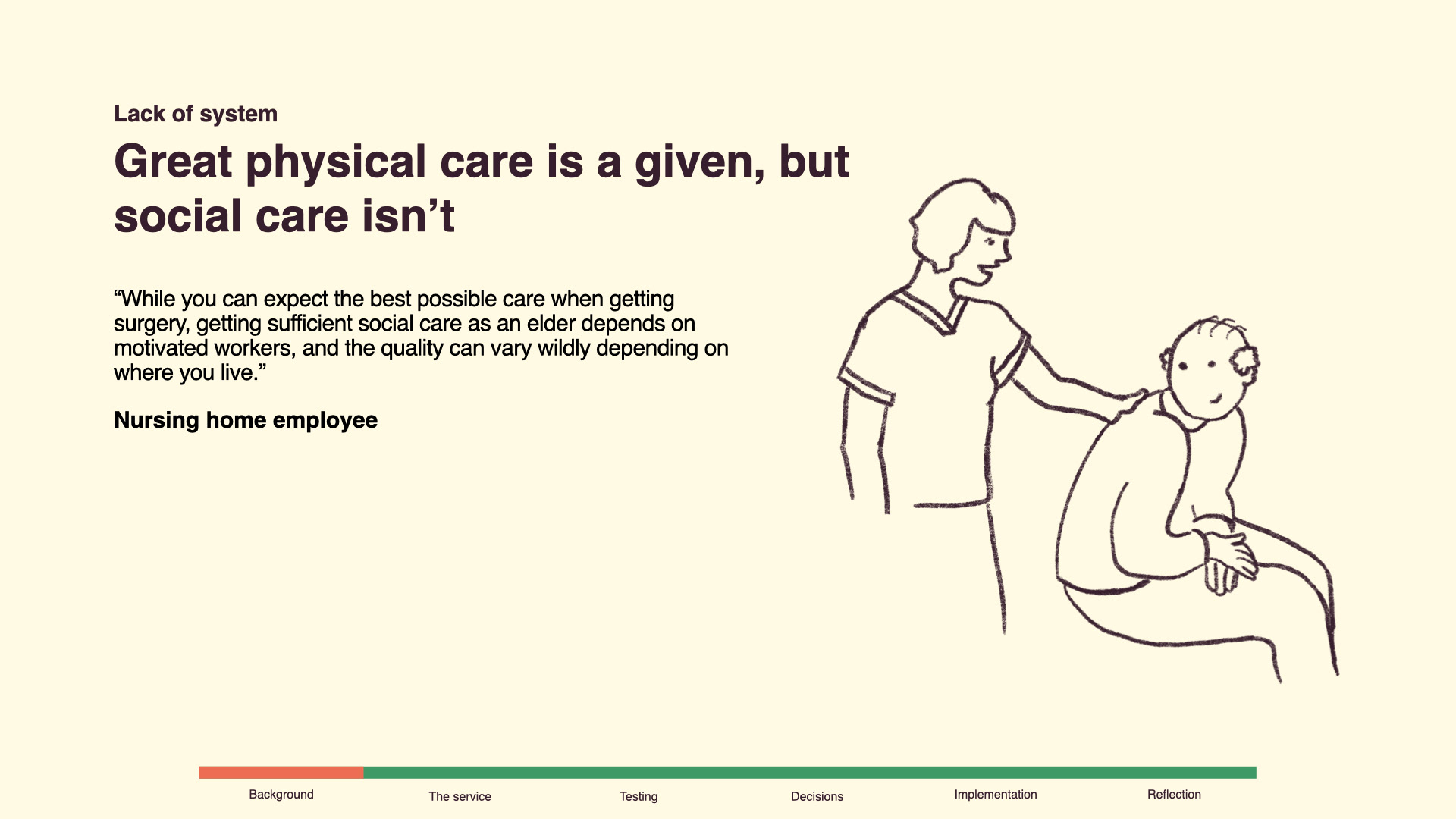
Contribution equals value. As a nursing home employee put it: when you are old, fewer people care about who you are and what you can contribute. People stop recognising your value and identity.
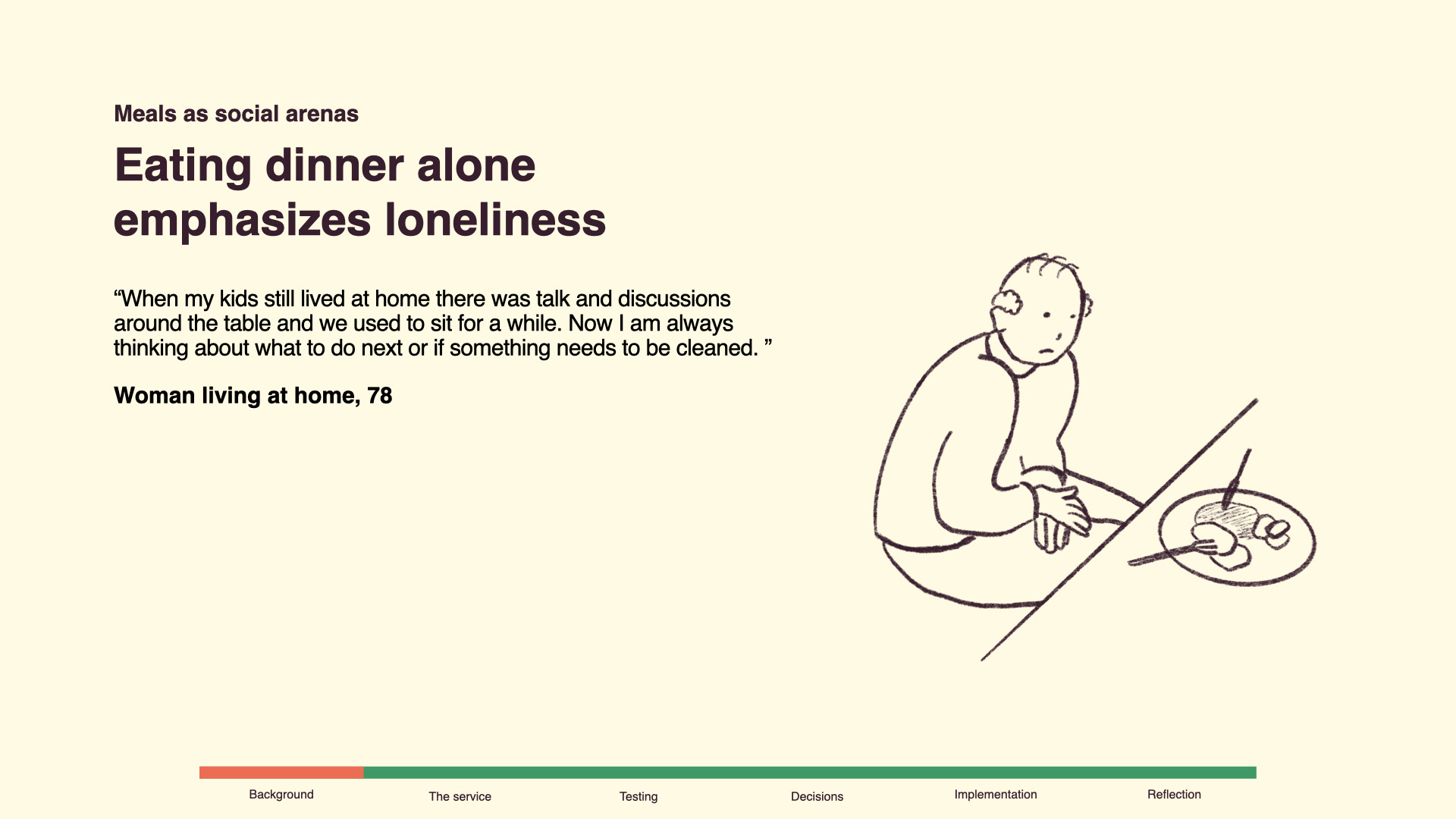
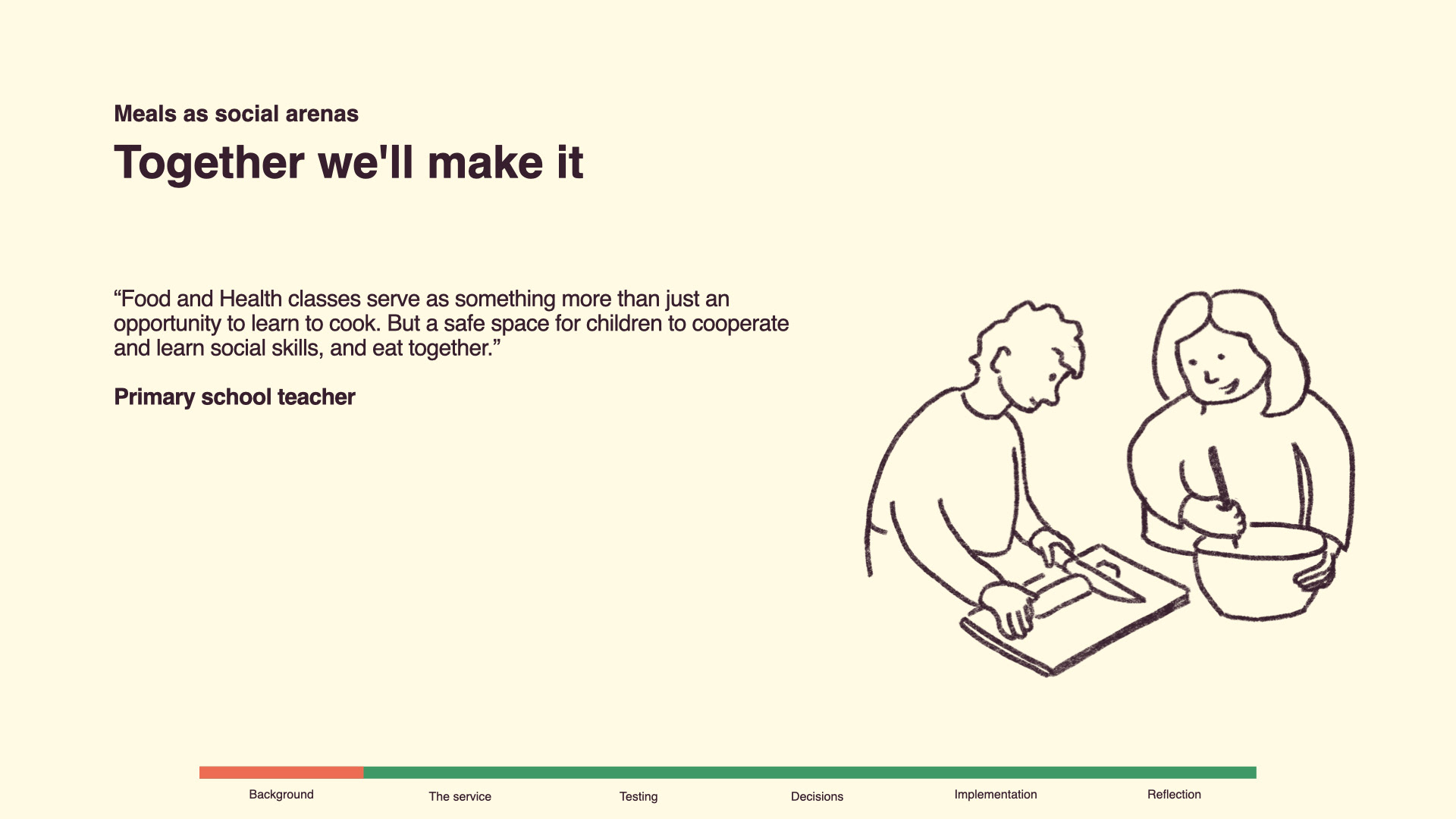
Meals are social arenas, and they disappear. A 78-year-old woman told us that when her children lived at home, there was talk and discussion around the table and they would sit for a while. Now she is always thinking about what to do next, or what needs cleaning.
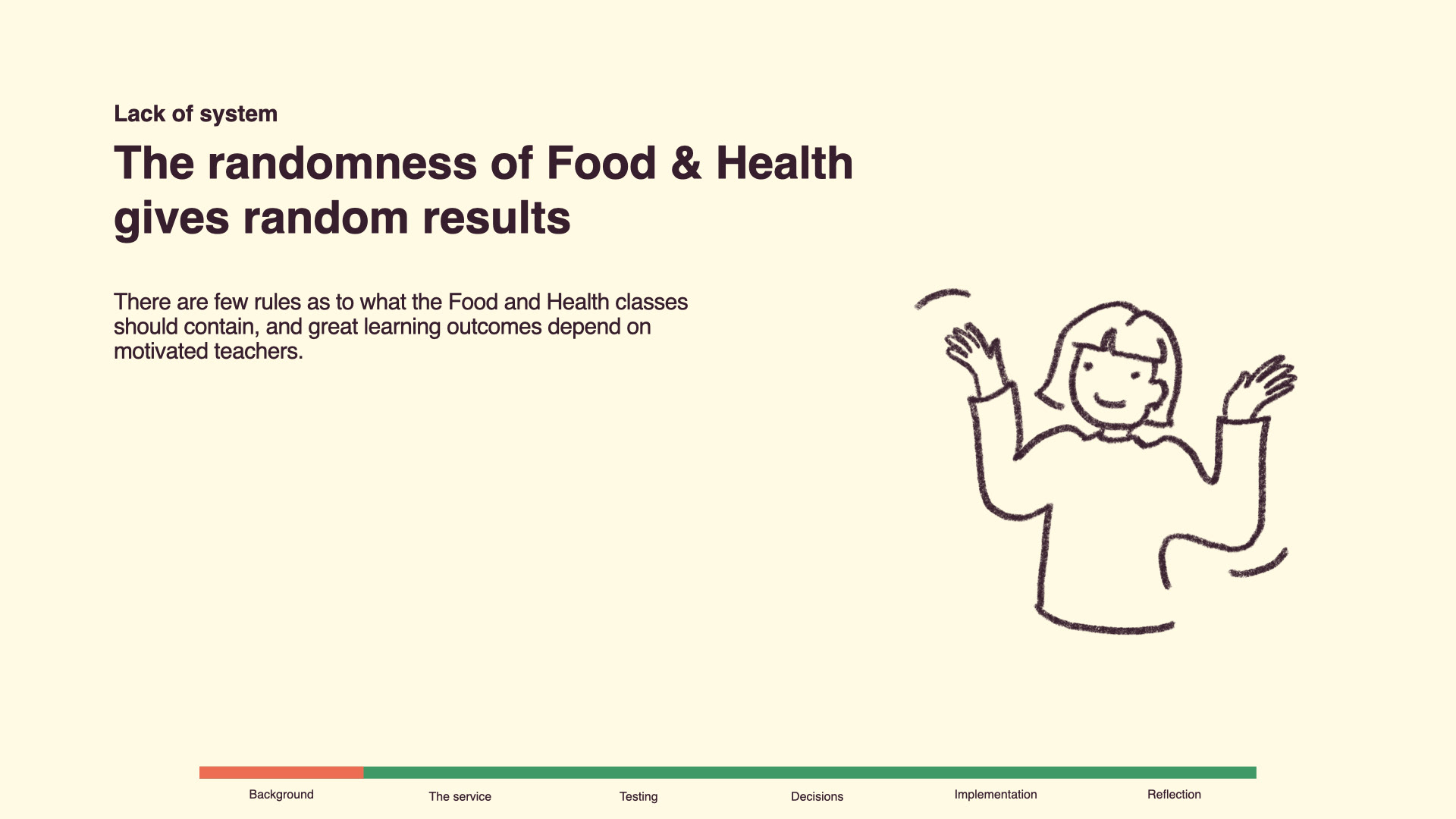
Social care has no system behind it. Physical care is a given. Social care depends on motivated individuals, and the quality varies wildly depending on where you live.
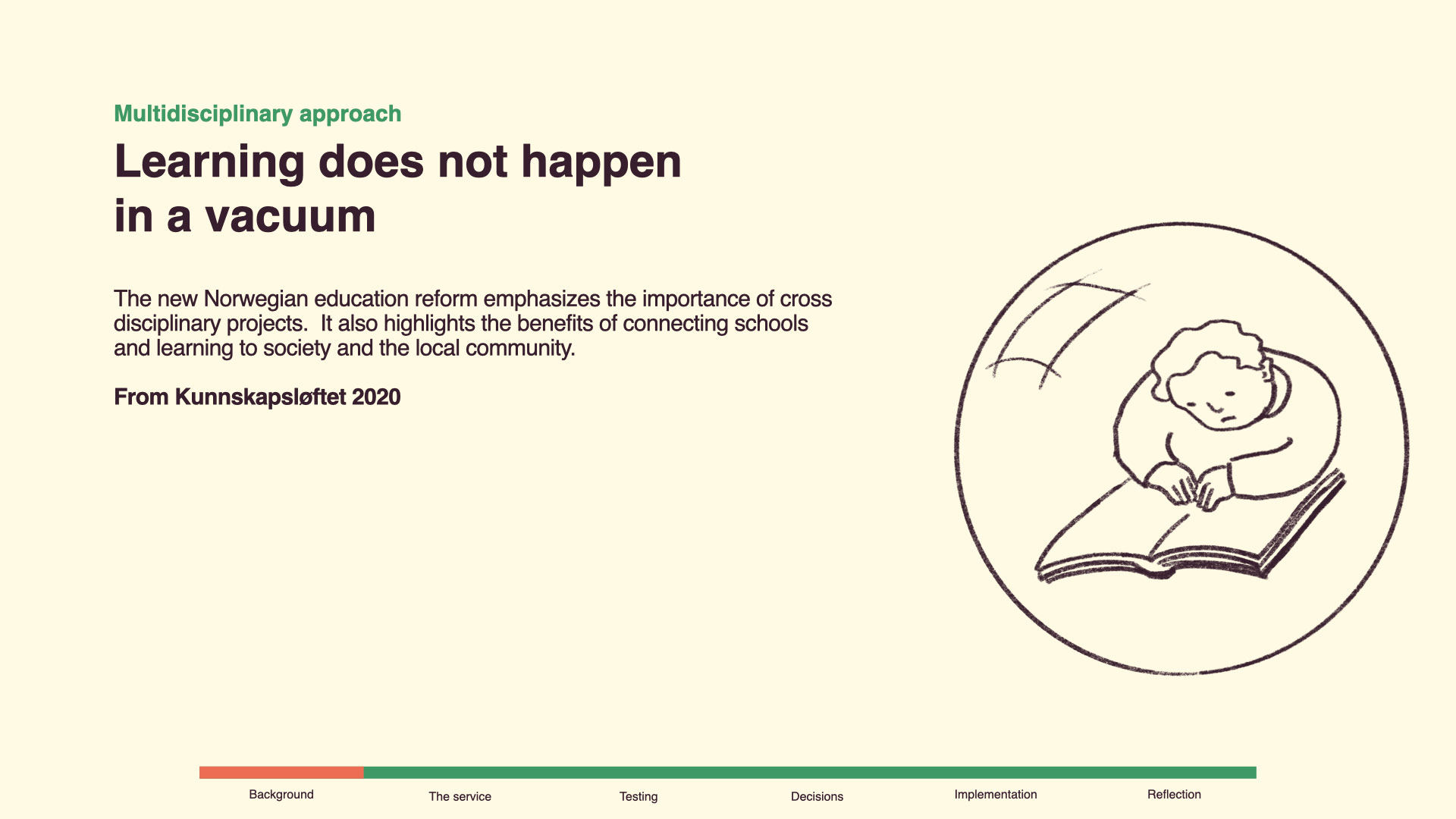
Learning does not happen in a vacuum. The 2020 Norwegian education reform pushes schools towards cross-disciplinary projects and stronger ties to the local community, but schools have no ready plan for how to do it.
The last insight came from a parallel group working with the Food and Health subject in primary school. Combining it with what we had found about seniors is what turned the project into something else: not a service for elderly people, but one where two unmet needs solve each other.
The service
Matmøter is a cooperation between a local school and a local elderly centre: an eight-week cross-disciplinary project where 6th graders and senior volunteers cook together, with food as the common ground.
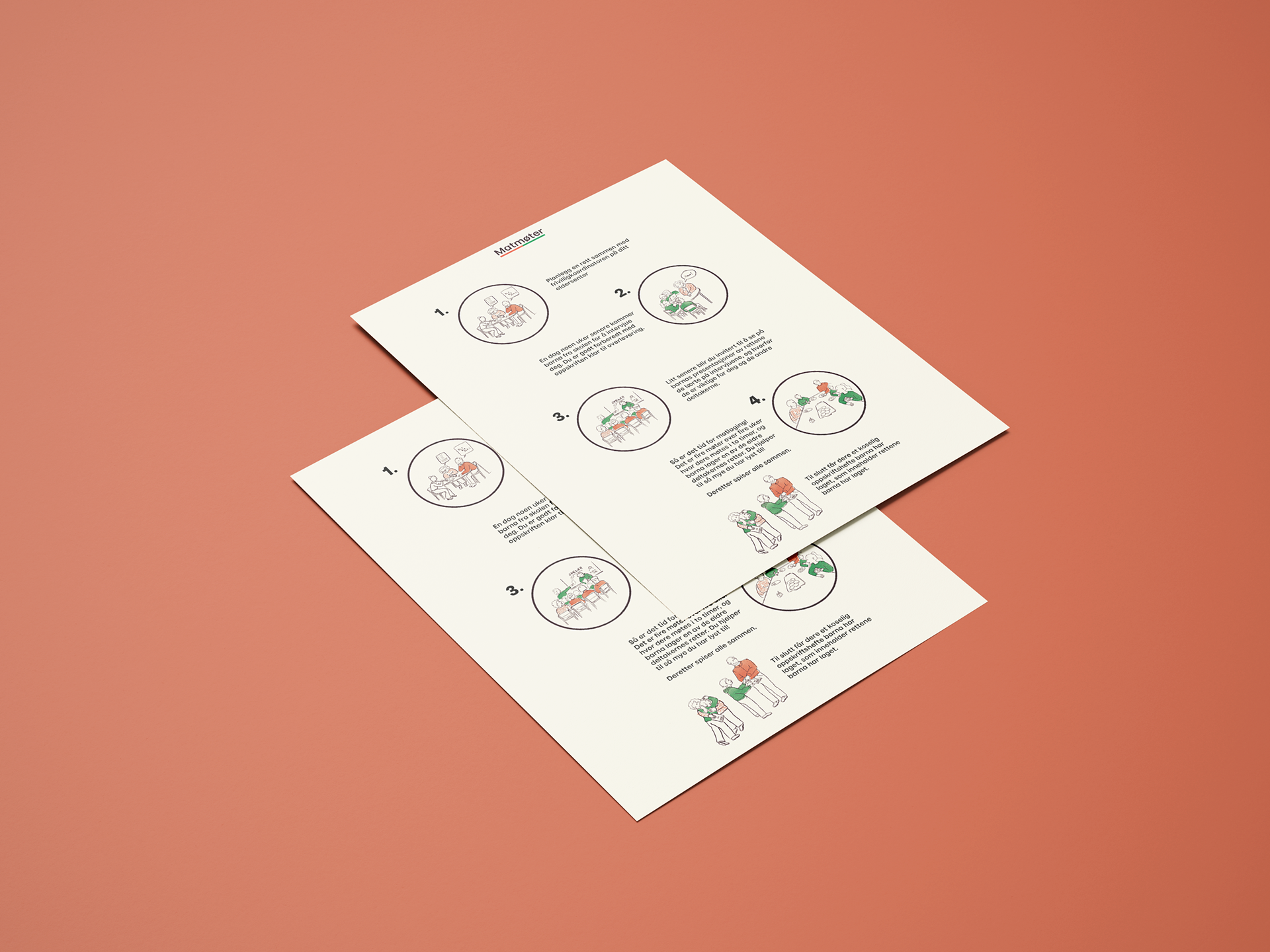
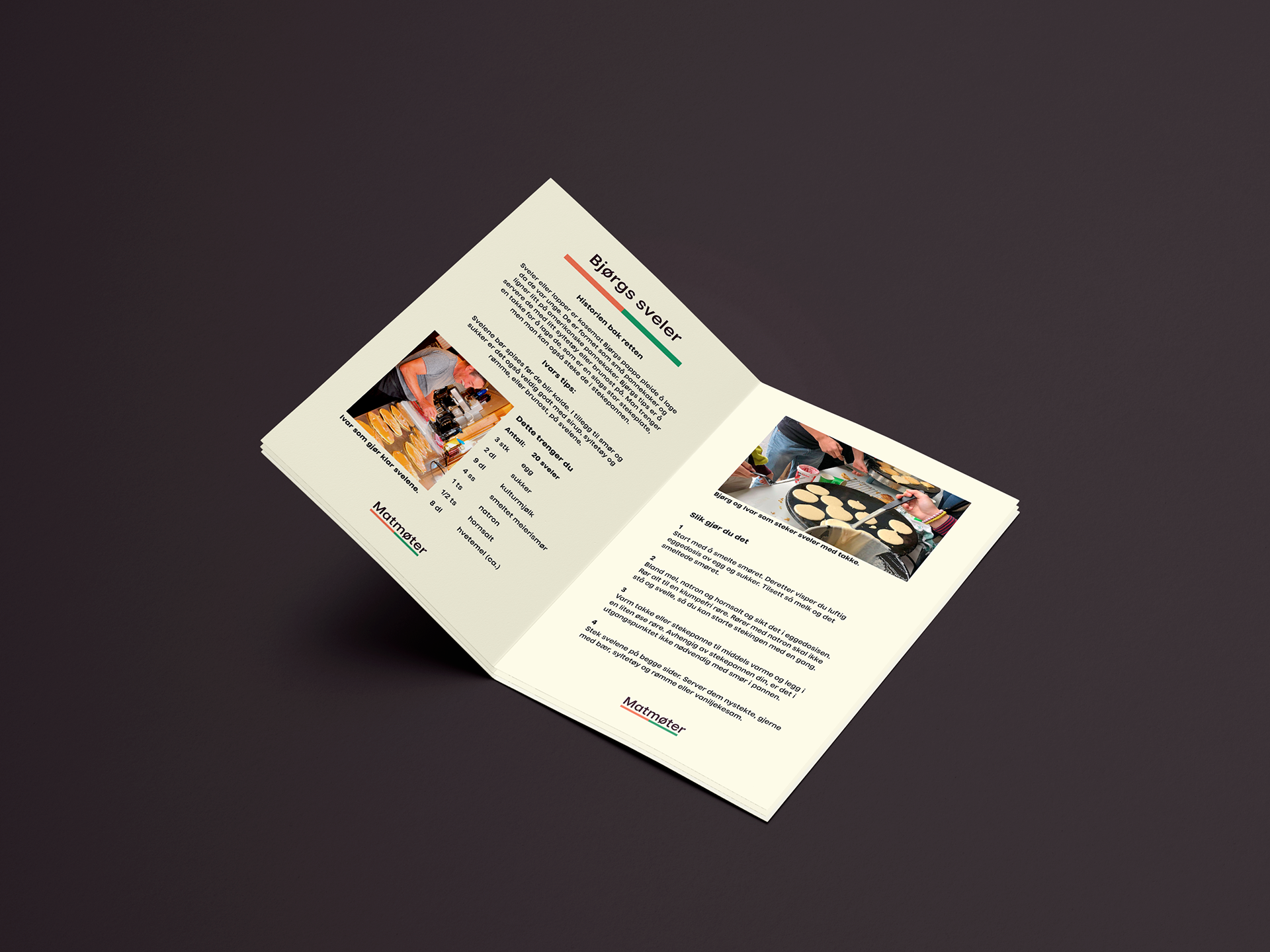
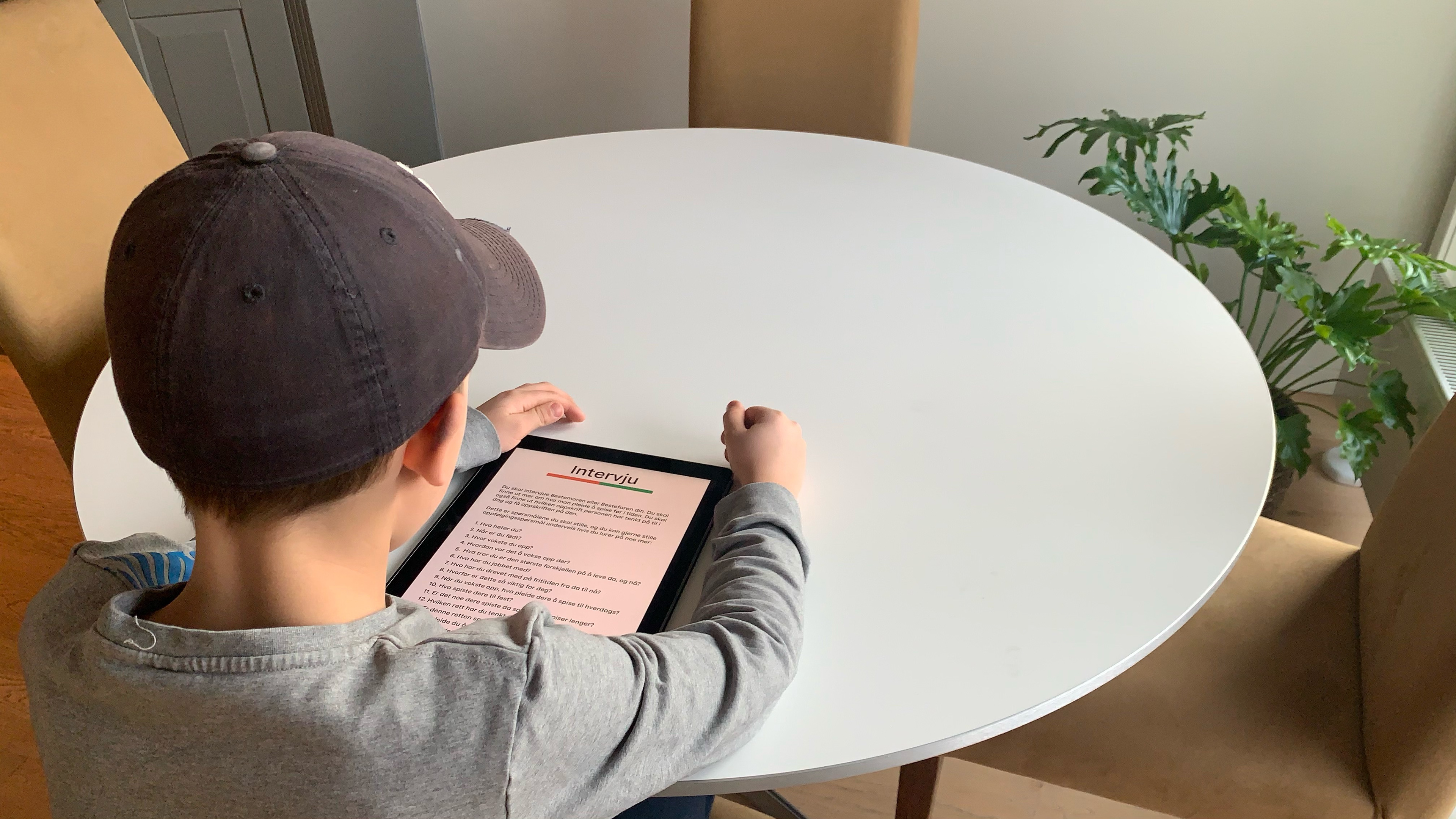
Pupils learn interview technique and food traditions, then interview the seniors about a dish that matters to them. They develop alternative versions of the dishes, present them at the elderly centre, and then cook together across four sessions. The project ends with the pupils making a recipe book and handing it over in a closing ceremony.
Touchpoints
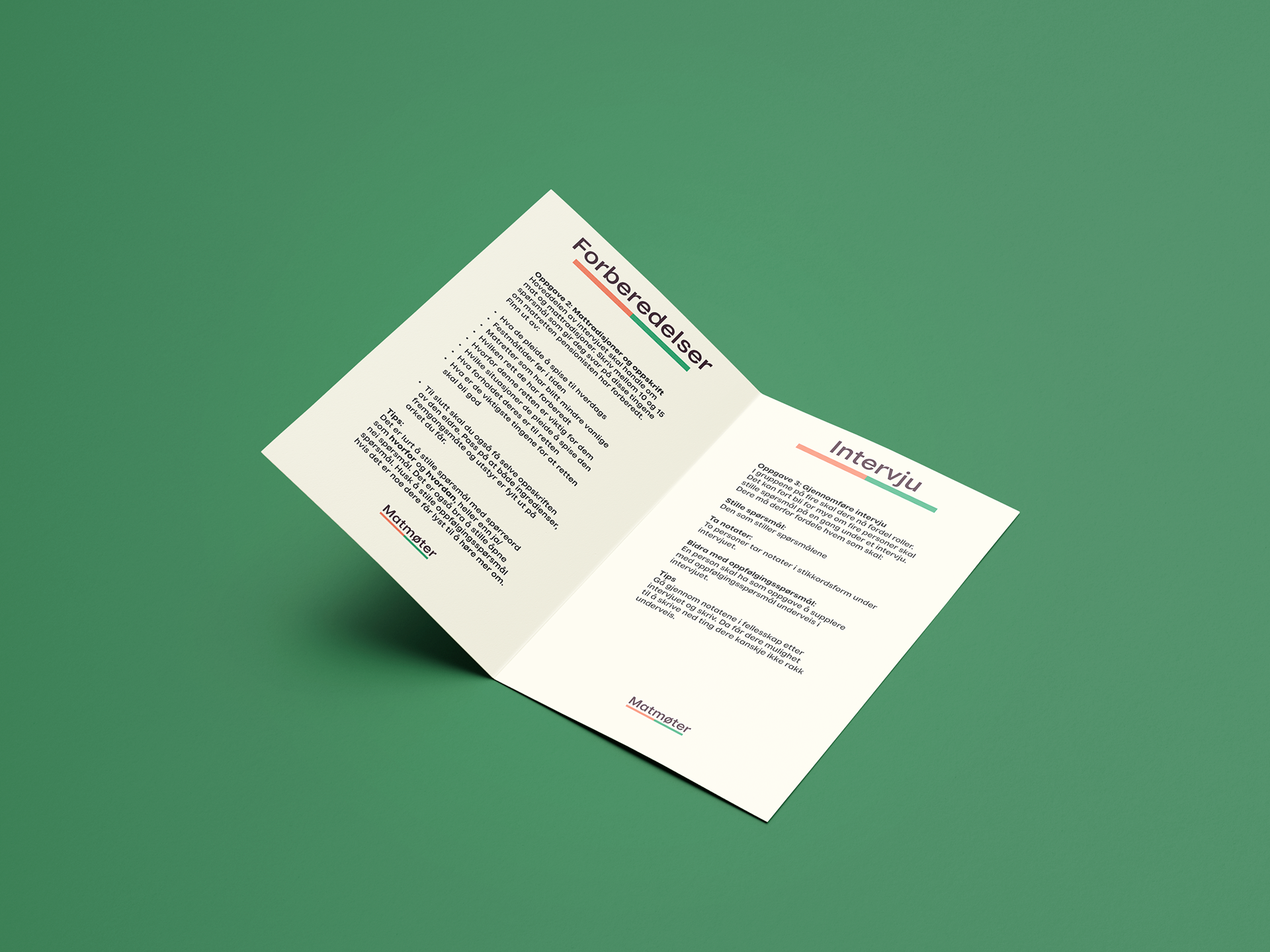
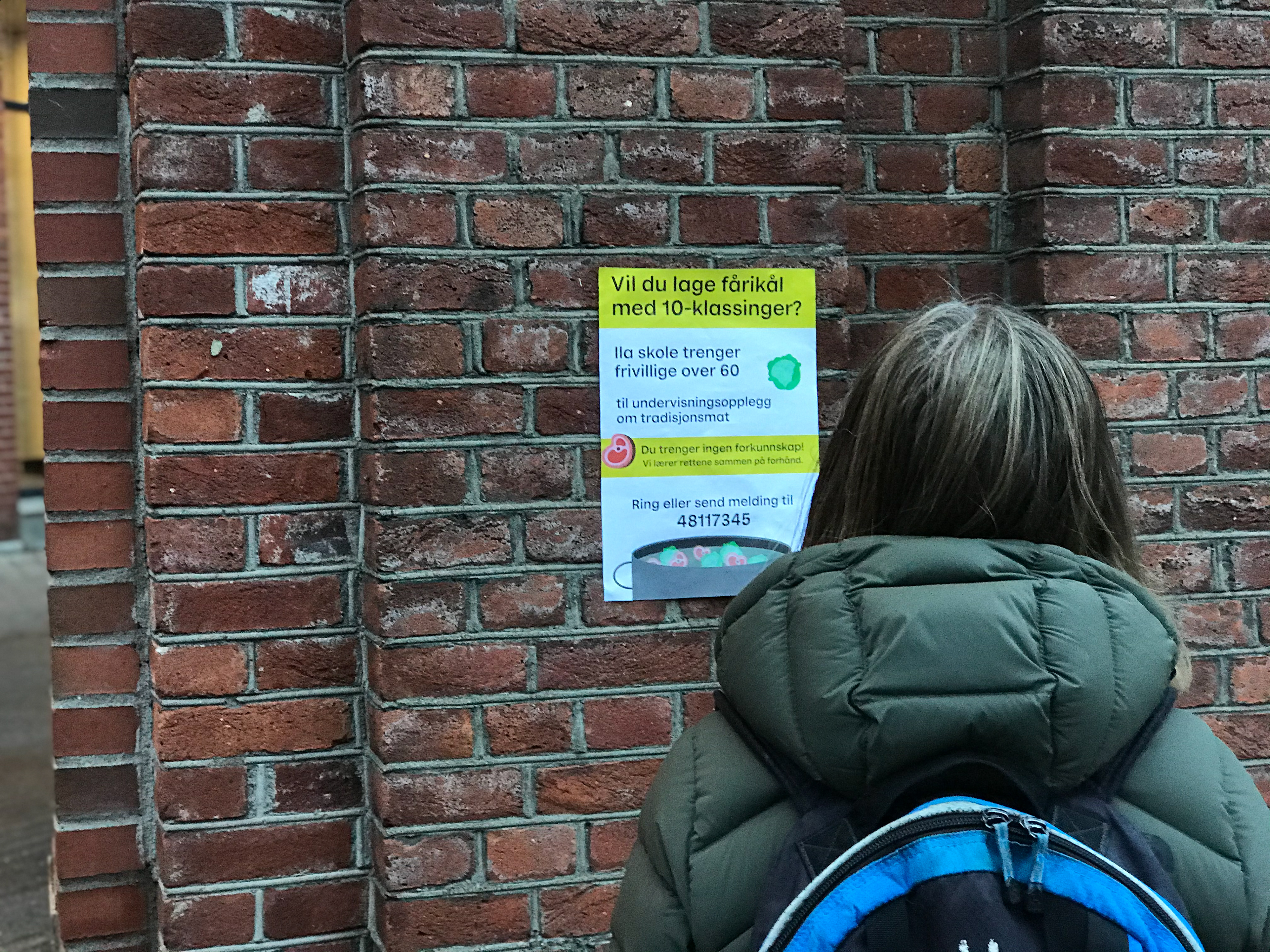
Five material touchpoints hold it together: a recruitment poster, a recipe sheet, interview assignments, an alternative dish guide and a recipe book template. They exist so the framework can be run by a teacher and a volunteer coordinator without us in the room.
Testing and handover
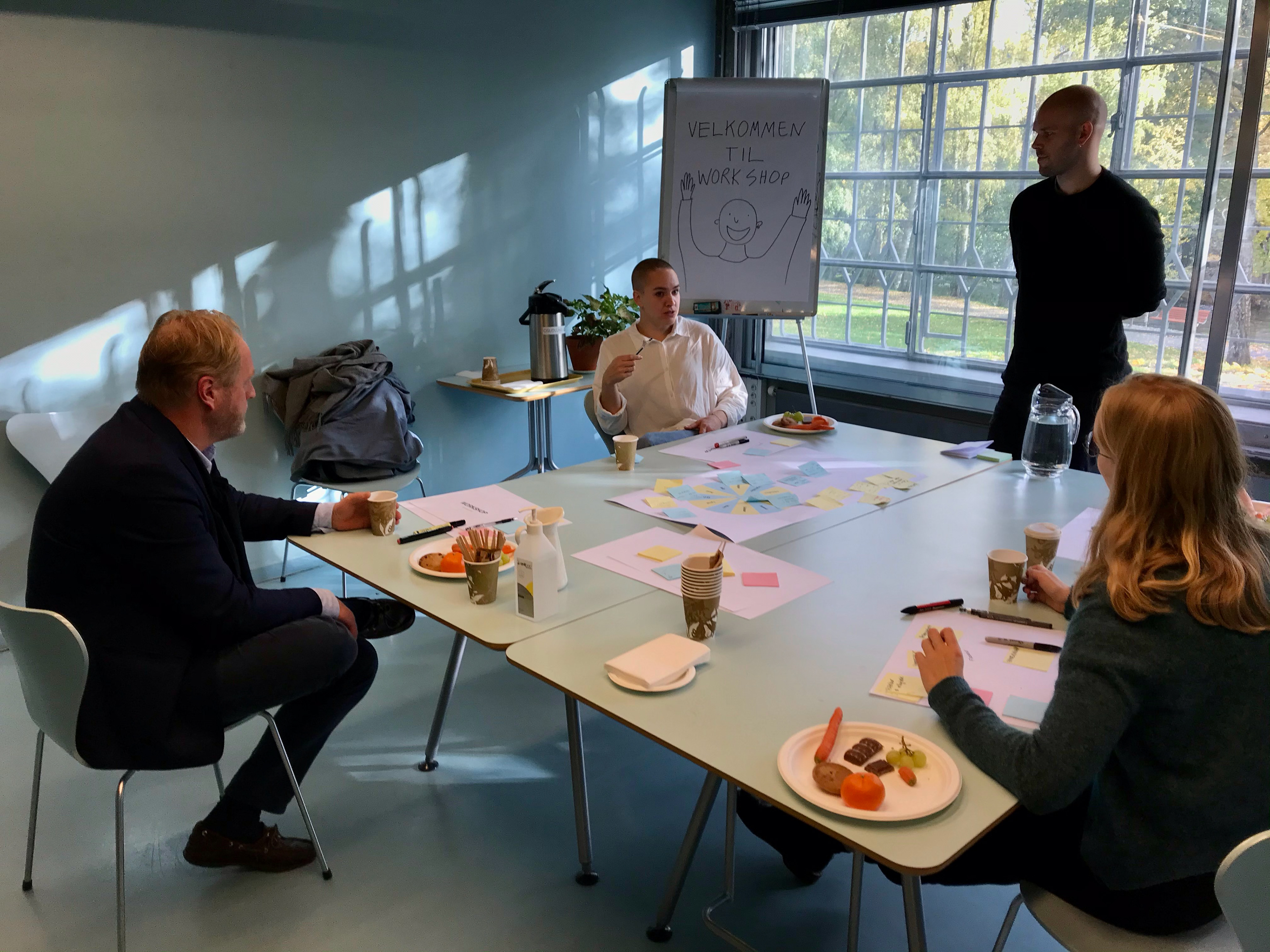
We built the service as a scenario and tested it with representatives from both the school system and elderly care, as well as with potential participants, and iterated the scenario and the flowchart between rounds. Individual touchpoints were tested separately.
We also needed someone to own it. Kirkens Bymisjon runs elderly centres across Norway and already has a programme called Generasjonsmøter, focused on meetings across generations. Their programme manager agreed that Matmøter was a good fit.
Where it landed
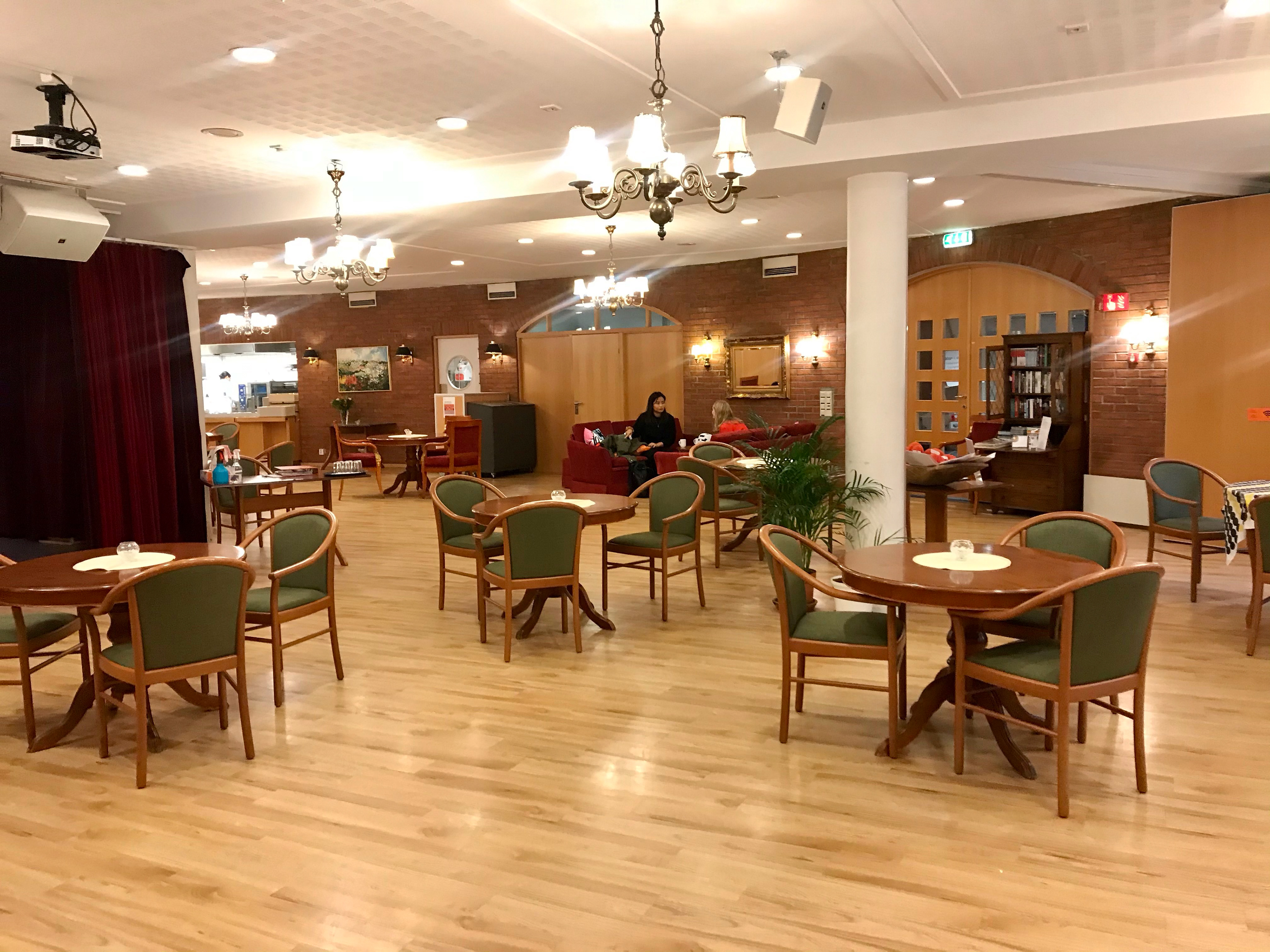
We recruited Engelsborg elderly centre and Vahl primary school, a few hundred metres apart, for a pilot: one class of 16 pupils and four volunteers, with the service to be iterated afterwards based on what we learned.
The pilot was cancelled due to Covid restrictions. It did, however, confirm something valuable: both the participants and the stakeholders were willing to take part, which told us the process had led to a service that could actually be run.